Fire-Rated Artificial Green Walls: NFPA 701, BS 5867 and EN 13501-1 Explained
Fire compliance is the number-one reason artificial green walls get rejected at site inspection — not how they look. This guide explains, in plain English, what the three most-cited standards actually test, which one your project likely needs, and how to make sure the certificates you receive cover the panels you actually receive.
September 25, 2026 · Compliance & Specifications · 6 min read
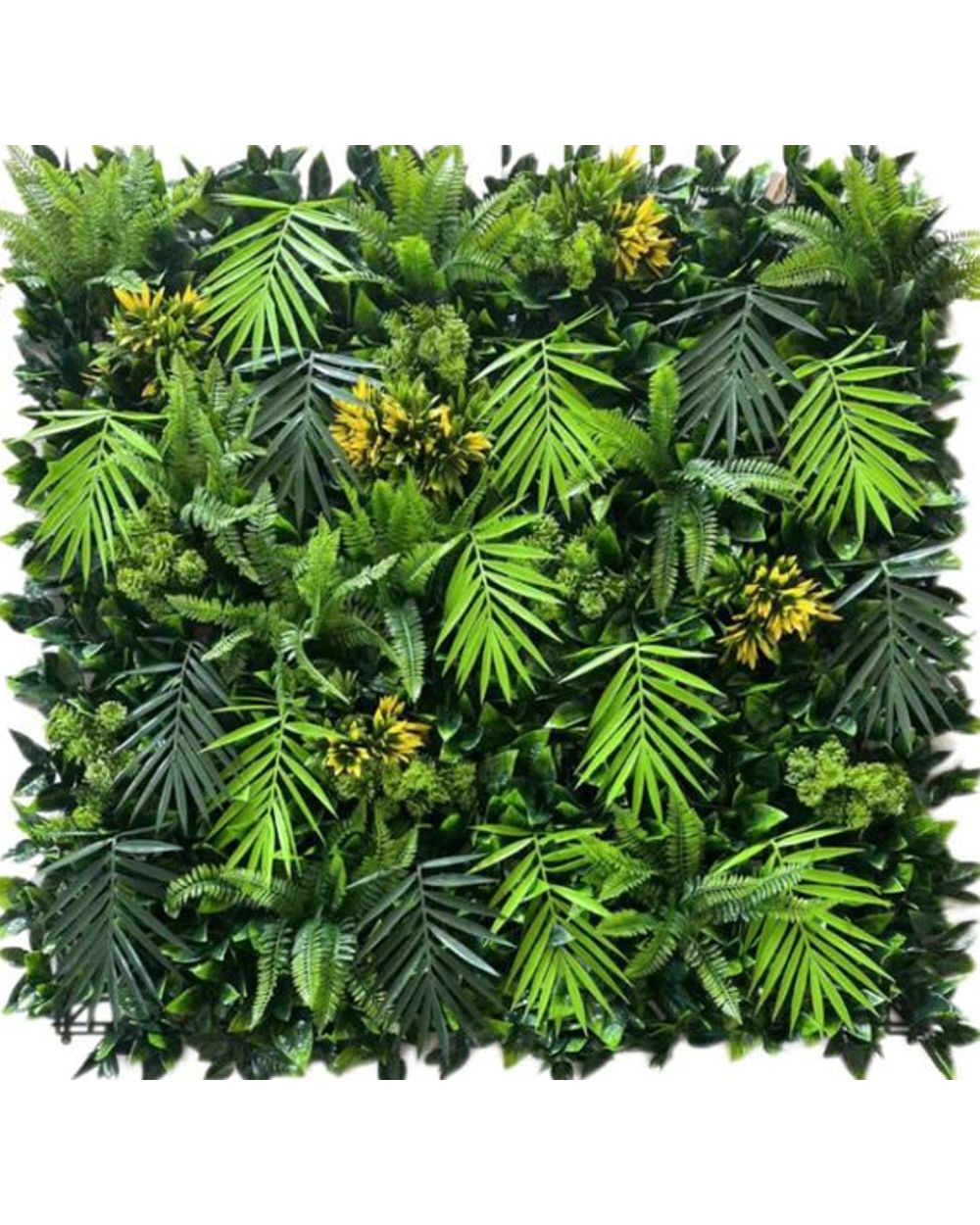
- NFPA 701 is the usual requirement in the United States; BS 5867 in the UK; EN 13501-1 across the EU — the standard is set by where the wall is installed, not by the supplier.
- Fire retardancy must be built into the foliage material or applied as a treatment at the factory; a spray applied on site is not acceptable for commercial inspection.
- Test documents must be issued per order and reference the actual panel specification — a generic catalogue certificate will fail an audit.
- Tell the factory the fire requirement at quotation stage; flame-retardant foliage is a material choice, not an add-on.
- Modular panels (from 50 m² MOQ) make it straightforward to re-test and re-order the same specification years later.
Why artificial green walls fail fire inspection
A green wall is, from the fire officer's point of view, a large vertical surface of decorative material mounted on a wall — exactly the category most building codes regulate. Two things cause rejections: the foliage was never flame-retardant in the first place, and the certificate on file does not match the product on the wall.
Both are avoidable with one habit: name the standard in the purchase order, and require test documentation for that specific panel specification.
NFPA 701 — the United States standard
NFPA 701 is the Standard Methods of Fire Tests for Flame Propagation of Textiles and Films — in practice, the test most US architects and AHJs (authorities having jurisdiction) cite for artificial foliage in hotels, restaurants, malls and public spaces.
What it measures is flame propagation: how quickly flame spreads across the material and whether it self-extinguishes. If your project is in the US and the spec sheet says "flame retardant" without naming a standard, ask whether it is NFPA 701 — that is the question the inspector will ask.
BS 5867 — the United Kingdom standard
BS 5867 is the British standard for fabrics used in curtains and drapery, and it is the reference most UK specifiers apply to artificial foliage. It has two commonly cited parts: Type B and Type C, with Type C the more demanding and the one usually named in commercial specifications.
If your fit-out is in the UK or a market that follows British standards, put "BS 5867" (and the part) in the enquiry. Documentation is issued per order by the factory — tell us at quotation stage, because flame retardancy is a material and treatment choice made during production, not an afterthought.
EN 13501-1 — the European classification
EN 13501-1 is not a test but a classification system: it grades building products from A1 (non-combustible) down through B, C, D, E and F for fire behaviour, alongside smoke and dripping classifications. Artificial green walls supplied to EU projects are typically classified in the B–D range depending on the foliage construction.
Because EN 13501-1 is a classification rather than a single test, this is the standard where "certificate does not match product" failures happen most. Make sure the classification report names the panel type you are buying.
| Standard | Where it applies | What it is |
|---|---|---|
| NFPA 701 | United States | Flame-propagation test method for textiles and films — the usual US specifier citation |
| BS 5867 (Type B/C) | United Kingdom & British-standard markets | Fabric fire test standard, commonly applied to artificial foliage |
| EN 13501-1 | European Union | Fire classification system (A1–F) including smoke and drip ratings |
How to get documentation that passes inspection
The sequence that works: state the installation country and the fire standard in your first enquiry; the factory confirms which foliage construction meets it and quotes accordingly; test documentation is issued with the order, referencing that panel specification; the same documents then go into your O&M or handover file.
This is also where modular panels earn their keep. Because every panel of a given style is produced to the same construction, re-ordering the same specification years later — for a phase-two fit-out or a damaged-area repair — uses the same documentation trail as the original order.
Beyond fire: what else inspectors and clients check
Fire is the gate, but three more items come up on commercial projects. UV stability: outdoor grade carries a 3-year colour-fastness warranty, premium outdoor grade up to 5 years — state whether the wall faces direct sun. Backing and fixings: panels need a substrate and fixing method suited to the wall type, which we supply with installation guidance. Maintenance: artificial green walls need no irrigation, but specify occasional dust-down for high-visibility interiors.
Frequently asked questions
Are your artificial green wall panels fire rated?
Can flame retardant be sprayed on site instead?
What is the minimum order for fire-rated panels?
Will the fire treatment affect the colour or feel of the foliage?
Related pages
Planning a project?
Send dimensions, drawings or reference images and we will reply with a priced quotation and a production drawing — normally within 24 hours on business days.