What Is the MOQ for Artificial Banyan Trees?
A short, direct answer for buyers specifying artificial banyan trees for hotels, malls and resorts — minimum order quantity, what drives the per-piece price, and how lead time changes with order size.
October 6, 2026 · Buying Guide · 8 min read · By Everflorae Editorial Team
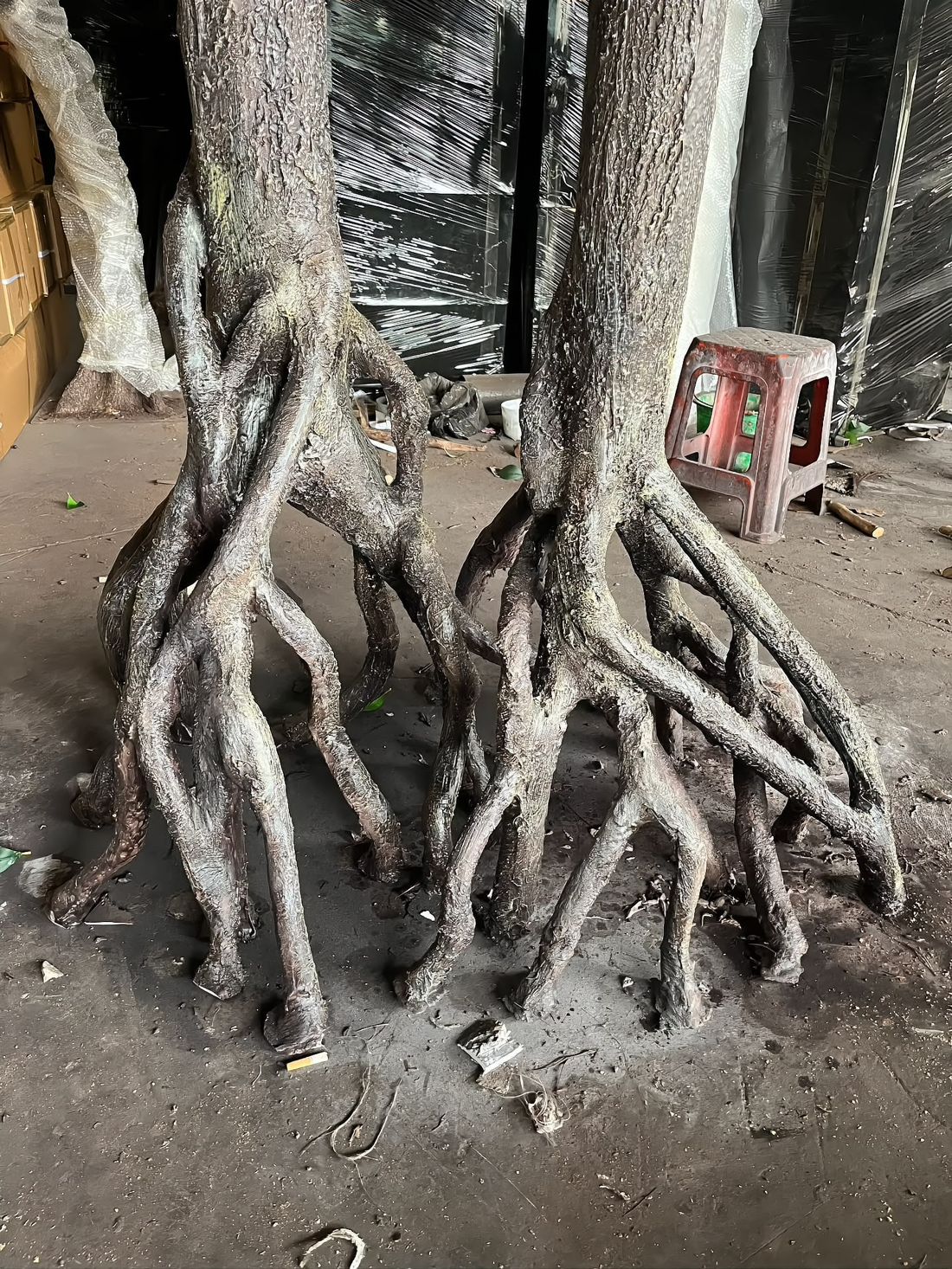
- The MOQ for artificial banyan trees at Everflorae is 1 piece for a custom sample and typically 20–50 pieces for a production run.
- Per-piece price scales with finished height (1–15 m), trunk count, foliage grade and the optional fire rating — not a fixed catalogue number.
- Standard production lead time is 7–15 days; fully custom banyan builds run 20–45 days.
- A 1-piece sample can carry the same outdoor UV and fire specifications as a full production batch, so you can qualify the build before committing volume.
What "MOQ" means for a custom banyan
MOQ — minimum order quantity — is the smallest number of pieces a manufacturer will start a production line for. For a modular, stock-standard product (think a uniform topiary ball) that number can be high because the line is set up for volume. An artificial banyan tree is different: it is built to a drawing, trunk by trunk, on a steel-core skeleton. Because the build is already bespoke, the line does not need a large batch to "pay for the tooling", so the practical MOQ is low.
At Everflorae the answer splits into two tiers. For sampling and approval, the MOQ is 1 piece — a single banyan built to your height, footprint and foliage spec so the design, finish and fire documents can be verified on a physical specimen before a larger commitment. For a production run, the MOQ is typically 20–50 pieces, with the exact floor set by how far the configuration departs from a standard build. A run of identical lobby trees for a hotel brand sits at the lower end; a mixed set of one-off atrium sculptures sits higher because each is effectively its own project.
How MOQ scales with size and configuration
Three variables move the MOQ most:
- Finished height (1–15 m) — taller specimens need a bigger steel-core skeleton, a wider canopy frame and more hands to dress foliage, so a small batch of 6–8 m trees costs more to set up than the same count of 2.5 m lobby accents. Very large specimens (10–15 m) are usually quoted as single units rather than by MOQ.
- Trunk count — the banyan reads as a banyan because of its multiple trunks joined by aerial roots. A 3-trunk base and a 7-trunk base are different amounts of moulding and assembly work, and that shifts both unit price and the batch size that makes the run economical.
- Stock-standard vs fully custom — if you accept a proven canopy profile and trunk layout, MOQ stays at the low end of the 20–50 range. If every tree is a unique sculpture, expect the MOQ to rise because engineering time is not amortised across identical units.
For buyers comparing suppliers, the useful question is not only "what is your MOQ" but "what spec does that MOQ cover". A low MOQ on a bare standard tree is not the same as a low MOQ on your actual lobby tree.
What drives the per-piece price
The second keyword buyers pair with MOQ is artificial banyan tree price — and the honest answer is that there is no single list price, because each tree is built to a drawing. The per-piece cost is a sum of a few factors:
- Finished height and canopy spread — more structure and more foliage. A 3 m tree and a 6 m tree are not "twice" the price; the larger canopy is disproportionately more frame and dress time.
- Foliage grade — silk foliage gives the finest interior detail and reads closest on inspection; UV-stabilised PE is specified for any outdoor-adjacent placement and carries a 3–5 year colour-retention warranty, which adds material cost.
- Trunk and root-base complexity — each additional trunk and the aerial-root detailing is hand work, the single biggest swing in unit price for a banyan.
- Fire rating option — adding documented NFPA 701 / BS 5867 / EN 13501-1 compliance (foliage and frame tested, certificates filed) is a per-order option that raises the unit price but is often mandatory for indoor public spaces.
- Integrated features — concealed base plates, uplight mounts or planters supplied as one unit add to the build but reduce your site labour.
The practical way to get a real number is to send the height, the floor footprint and the setting; we return a structured quotation that separates structure, foliage grade, fire documents and installation so the price is transparent rather than a black box. For context on how banyans compare with other forms, see our bulk banyan buying guide and the artificial trees product page.
Lead time and how order size affects it
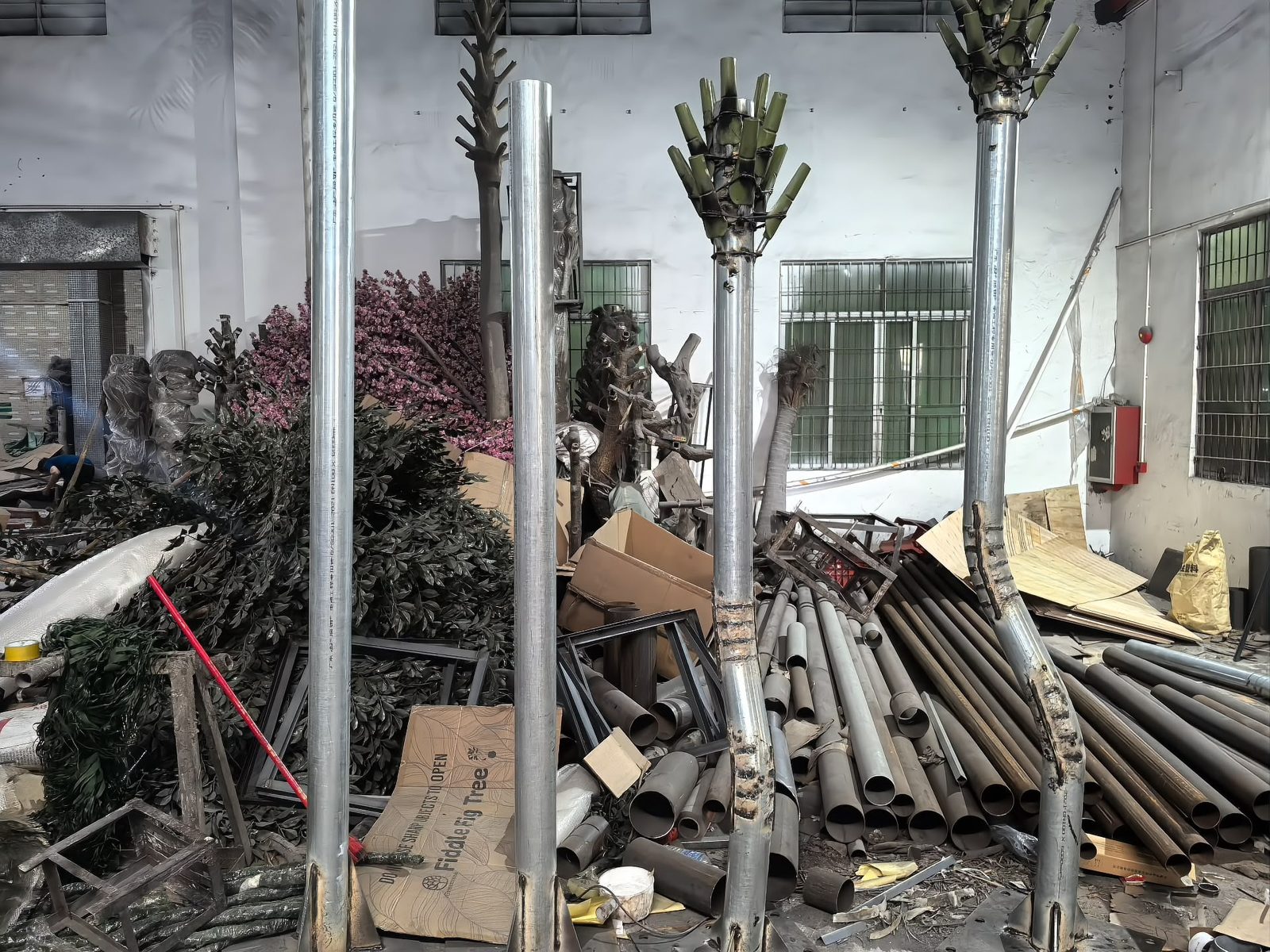
MOQ and lead time are linked but not the same. Standard production — confirmed drawing to packed goods — runs 7–15 days. Fully custom banyan builds, especially multi-trunk structures with large canopies or integrated lighting, run 20–45 days because engineering and trial assembly take longer than repetition.
A 1-piece sample is usually faster than a full batch, not slower, because it does not queue behind other orders on the line. Buyers routinely use the sample window to finalise the hotel's exact height and footprint, then place the production MOQ against an approved reference tree — which also de-risks the larger run.
Fire rating and compliance as a per-order option
For indoor public spaces — lobbies, atriums, malls — fire behaviour is not optional, and inspectors ask for documents. Fire rating is specified per order: request foliage and frame tested to NFPA 701, BS 5867 or EN 13501-1 and keep the certificates on file. A low-MOQ sample can be produced to the same fire specification as the production batch, so compliance is qualified up front rather than discovered at inspection. See the compliance page for the standards we work to.
Placing a low-MOQ or trial order
The route for a cautious first order is straightforward:
- Step 1 — send the spec. Ceiling height, available floor footprint, indoor or outdoor setting, and any reference photo. One line is enough to start.
- Step 2 — receive a structured quotation. We separate trunk structure, foliage grade, fire documents and installation, usually within 24 hours on business days.
- Step 3 — approve a 1-piece sample. The MOQ for sampling is 1 piece; verify form, finish and certificates on the physical tree.
- Step 4 — release the production MOQ. Typically 20–50 pieces, built to the approved sample, on the 7–15 / 20–45 day clock.
For branded or project-specific forms, the same path runs through OEM / ODM: the 1-piece sample still applies, and the production MOQ is set by how far the form departs from a standard build.
Frequently asked questions
What is the minimum order quantity for artificial banyan trees?
How much does an artificial banyan tree cost?
How long does it take to produce a custom banyan tree?
Is a low-MOQ banyan tree suitable for outdoor use?
Sources & attributed quotations
Named sources behind this guide. The quotations below are verbatim from the issuing bodies, with outbound links to the official pages.
“This standard establishes test methods to assess the propagation of flame of various textiles and films under specified fire test conditions.”
— NFPA (National Fire Protection Association), NFPA 701, Standard Methods of Fire Tests for Flame Propagation of Textiles and Films (2023 edition), official source
“This document provides the reaction to fire classification procedure for all construction products, including products incorporated within building elements with the exception of power, control and communication cables which are covered by EN 13501-6.”
— CEN (European Committee for Standardization), EN 13501-1, Fire classification of construction products and building elements — Part 1: Classification using data from reaction to fire tests, official source
- NFPA — NFPA 701 standard page
- BSI — BS 5867-2:2008, flammability of curtain and blind fabrics
- CEN — EN 13501-1, reaction-to-fire classification
Related pages
Related project cases
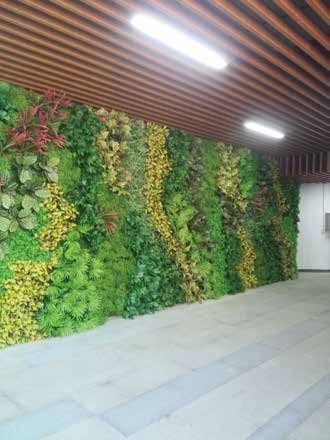
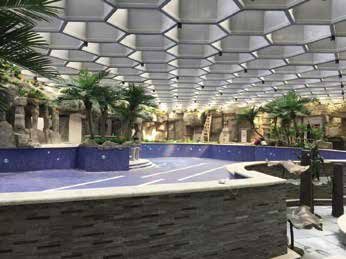
Real projects we have delivered in this kind of setting — on-site photographs, no mock-ups.
Specifying a banyan tree for a project?
Send the ceiling height, the available floor footprint and the setting, and we will return a structured quotation covering trunk structure, foliage grade, fire documentation and installation — usually within 24 hours on business days. Sampling starts at 1 piece.