How Do You Order Artificial Topiary Balls in Bulk?
Ordering artificial topiary balls in bulk is a four-step process: fix the specification (diameter across the 0.5–5 m range, welded galvanised steel armature, UV-stabilised ABS or PU boxwood foliage), approve a 3D render and then a sample from 1 piece, confirm the lead time in writing — 20–45 days including drawing approval for this line — and specify fire-retardant treatment (NFPA 701, BS 5867 or EN 13501-1) and the outdoor UV grade separately.
October 4, 2026 · Buying Guides · 8 min read · By Everflorae Editorial Team
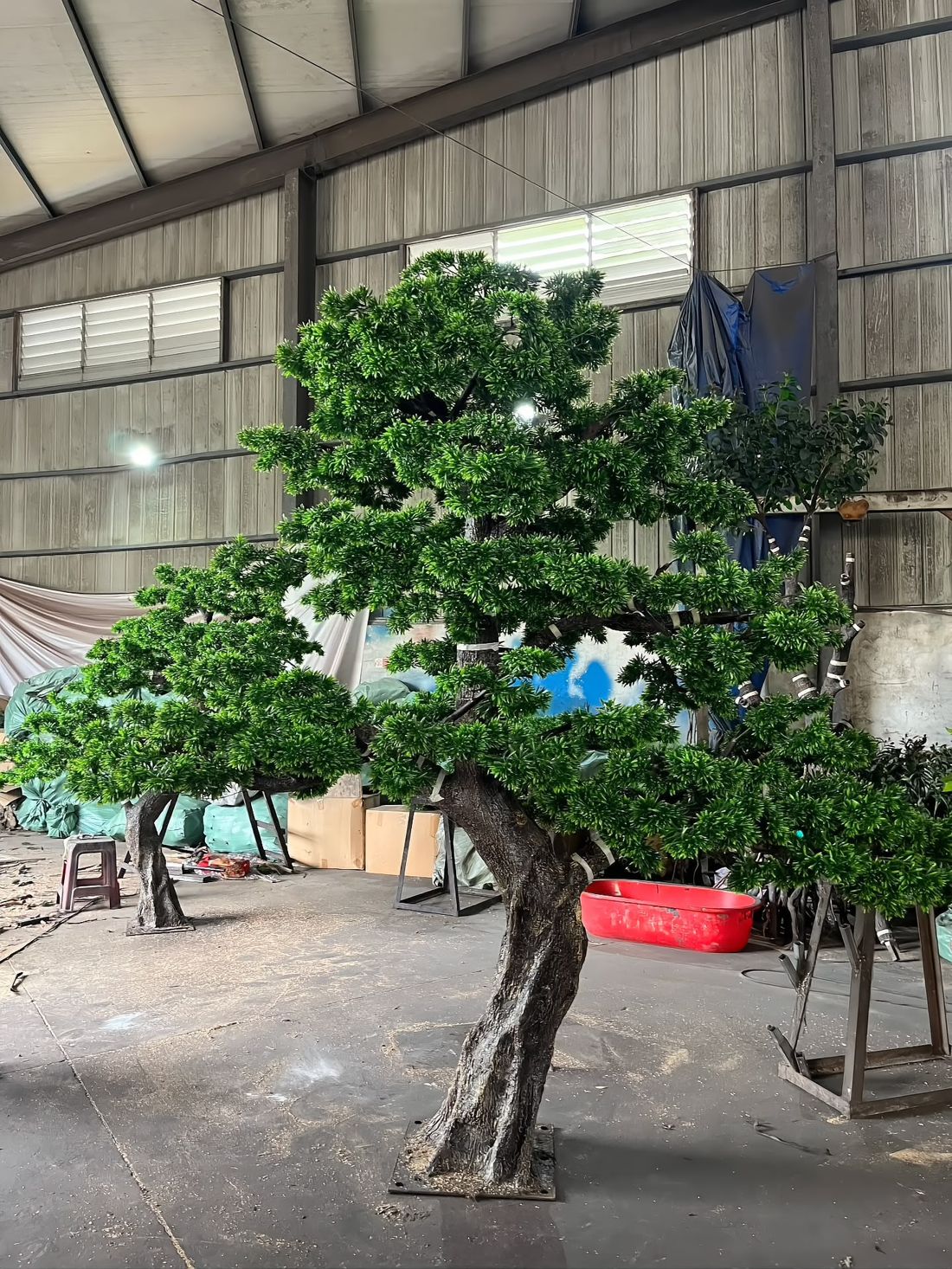
- Topiary balls are made to order: sizes run 0.5–5 m on a welded galvanised steel armature.
- Minimum order is 1 piece, and a 3D render is provided before production starts.
- Lead time is 20–45 days including drawing approval — longer than repeat tree models because the armature is welded to shape.
- Fire rating and the outdoor UV grade are two separate specifications; ask for both.
- A 3 m ball weighs roughly 60–120 kg — get the exact weight and footprint with the drawing before you plan lifting.
Why topiary balls are ordered as a set, not picked from a shelf
A topiary ball is almost never bought alone. It arrives as a pair flanking an entrance, a row along a hotel driveway, a cluster hanging in a mall atrium, or a repeated motif across a restaurant terrace — and repetition is exactly what exposes inconsistency. Because each ball is built on a welded armature and dressed by hand, two batches made to two different drawings will not match: the diameter drifts, the foliage density changes and the silhouette reads differently in photographs of the same space.
That is why a serious bulk enquiry for artificial topiary starts with one approved drawing that the whole run is built against, rather than a catalogue code and a quantity. If you are still deciding where spheres fit in a hospitality scheme, our hotel lobby and atrium guide covers the placement side, and the buyer guides collect the commercial questions — pricing, MOQ, lead time, shipping — in one place.
Step 1 — Fix diameter, frame and foliage before you ask for prices
Bulk quotations are only comparable when the specification is fixed. Write down five things before you send the enquiry: the diameter of each ball (the standard range for this line is 0.5 m to 5 m), the quantity per size, how the ball will be mounted — floor-standing on a base, set into a planter, or suspended — whether it is indoor or permanently outdoors, and any fire or UV requirement.
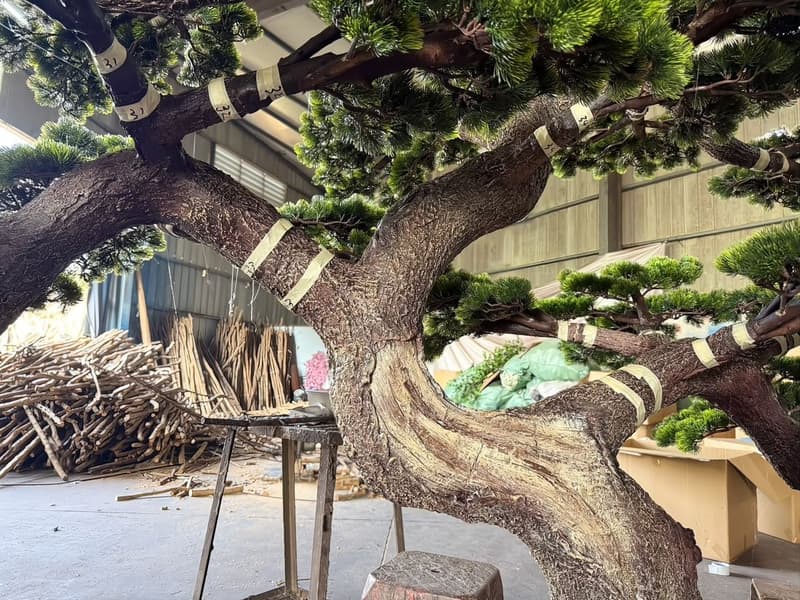
The construction choices follow from those answers. The frame is a galvanised steel armature welded to the approved form; the surface is UV-stabilised ABS or PU boxwood foliage, or a mixed foliage specified for the look you want; the finish can be natural, gloss or matte. For permanent exterior use the foliage is specified as UV and rain rated. A 3 m ball for a sheltered lobby and a 3 m ball for an exposed rooftop terrace are different objects with different material costs, even at identical diameter, so state the setting at quotation stage rather than after the run has started.
Step 2 — Approve the 3D render, then a 1-piece sample
This line is made to order with a 1-piece minimum, and a 3D render is provided before production — which makes sampling the cheapest risk reduction available on a bulk order. Approve the render first: it shows how the sphere reads in greenery, how dense the form looks at your installation height, and how the mounting detail works. Only then move to the physical sample.
When the sample arrives, check four things and photograph them: foliage density at close range (can you see the armature through it?), colour against your approved reference, the weld and finish on the armature and base, and the mounting hardware. Keep the approved sample and the correspondence — on a bulk run, the approved sample is the document the delivery is judged against.
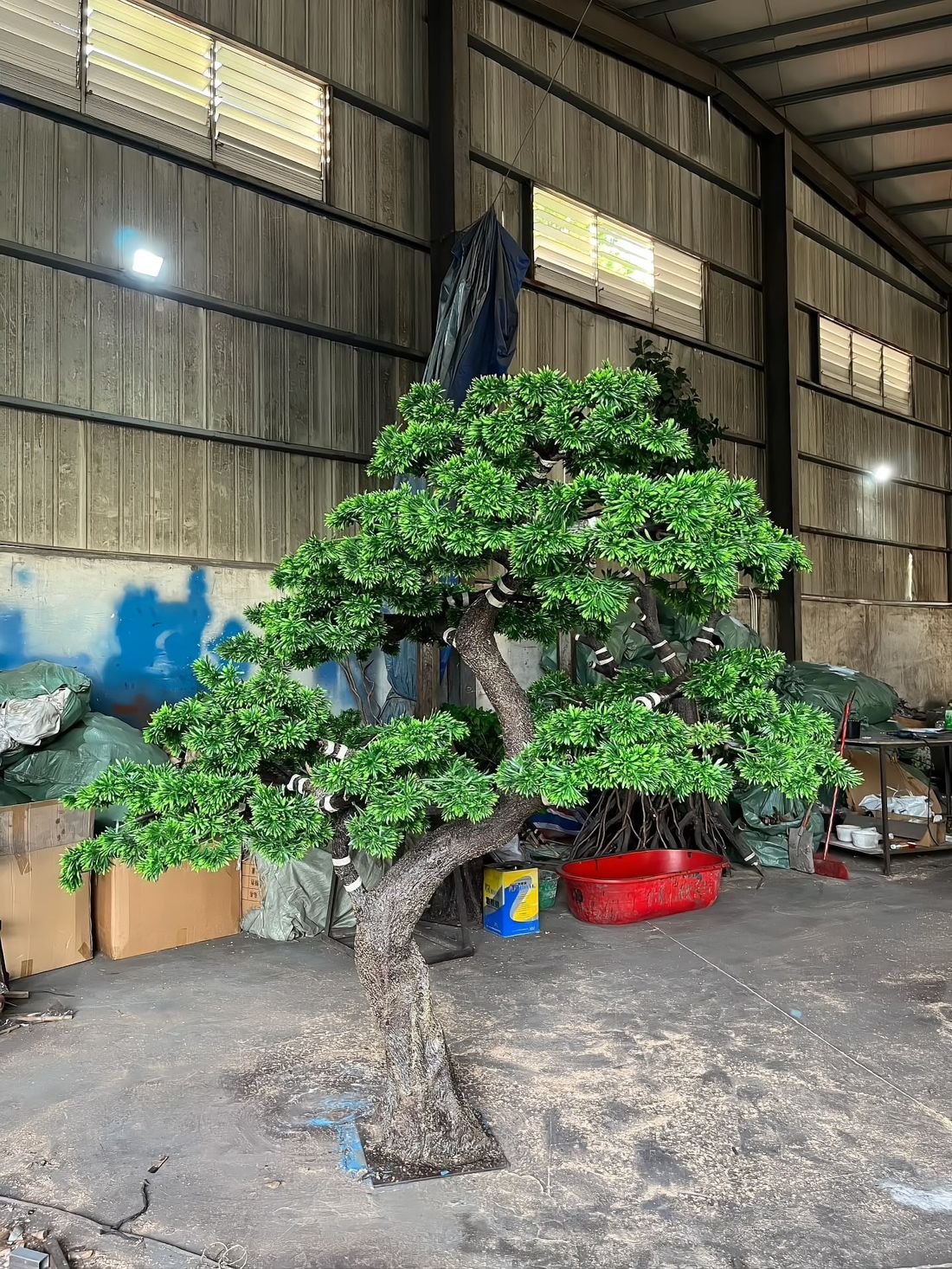
Step 3 — Confirm the artificial topiary ball lead time in writing
The artificial topiary ball lead time is 20–45 days including drawing approval. It is longer than a repeat tree model because the armature has to be welded to the approved shape and the foliage set by hand — there is no existing mould to pull from. A ball that reuses an approved drawing from a previous order sits at the shorter end of that range; a new diameter, a new mounting detail or a bespoke form sits at the longer end.
Put three dates in the purchase order: deposit date, drawing and sample approval date, and ex-factory date. Lead time runs from the last approval, not from the enquiry, and the bulk orders that slip almost always slip because drawing sign-off took two or three weeks of email. If your project has a hard installation date, or needs delivery in phases across several floors or sites, say so at quotation stage so production slots and packing are planned from the start.
Step 4 — Specify fire rating and the outdoor UV grade separately
Fire rating and weathering are two different specifications, and ordering one does not give you the other. For balls installed inside commercial buildings, fire-retardant treatment is normally specified against NFPA 701 (the common North American reference), BS 5867 (the UK curtain-and-drapery fabric standard often cited by fit-out contractors) or EN 13501-1 (the European reaction-to-fire classification). For exterior installations, the requirement is UV-stabilised foliage rated for permanent outdoor use, plus a finish that tolerates rain and sun. Ask for the test documents for the exact foliage in your order at quotation stage — not after the container has sailed.
The verbatim definitions from the issuing bodies, with links to the official pages, are collected in the sources section below, and an overview of what each document covers is on our compliance page.
Weight, packing and installation on a bulk run
Weight is the detail that most often surprises buyers on this line. It depends on the frame and foliage density — typically 60–120 kg for a 3 m ball — so lifting, fixing and floor loading have to be planned before the goods arrive. The exact weight and footprint are supplied with the drawing, which is what your installer needs to specify lifting gear, fixings and, for suspended balls, the overhead structure.
Ask two packing questions as well: the packed volume per unit, which determines how many balls fit a container and therefore the freight cost per piece, and how the foliage is protected in the crate. Spheres are awkward shapes — compress the foliage badly in packing and it will not recover on site. Our manufacturing process page shows the QC, packing and loading stages behind this line.
Frequently asked questions
What is the minimum order for artificial topiary balls in bulk?
How long is the artificial topiary ball lead time?
Can bulk artificial topiary balls be supplied fire-rated?
How heavy is a topiary ball and how is it installed?
Sources & attributed quotations
Named sources behind this guide. The quotations below are verbatim from the issuing bodies, with outbound links to the official pages.
“This standard establishes test methods to assess the propagation of flame of various textiles and films under specified fire test conditions.”
— NFPA (National Fire Protection Association), NFPA 701, Standard Methods of Fire Tests for Flame Propagation of Textiles and Films (2023 edition), official source
“This part of BS 5867 specifies flammability requirements for fabrics and fabric assemblies for use in the production of non-domestic curtains, drapes and window blinds and for finished articles including combinations of curtains and linings when tested by the methods specified in BS EN ISO 6941 and BS EN ISO 15025.”
— BSI (British Standards Institution), BS 5867-2:2008, Fabrics for curtains, drapes and window blinds — Flammability requirements. Specification, official source
- NFPA — NFPA 701, fire tests for flame propagation of textiles and films
- BSI — BS 5867-2:2008, flammability of curtain and blind fabrics
Related pages
Related project cases
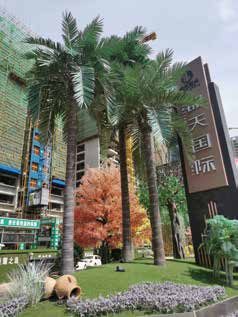
Real projects we have delivered in this kind of setting — on-site photographs, no mock-ups.
Planning a bulk topiary order?
Send the diameter, quantity, mounting method, setting and fire or UV requirements, and we will reply with a 3D render, a priced quotation and the sampling options — usually within 24 hours on business days.