What Is the Best Artificial Boxwood for a Restaurant?
The best artificial boxwood for a restaurant is a UV-stable boxwood hedge panel or topiary ball in ABS/PU foliage. Panels run 50×50 cm and stack to 1.2–1.8 m booth dividers; balls span 30–120 cm for tables and entrances. Standard production is 7–15 days with 1-piece sampling, and outdoor UV foliage holds colour 3–5 years.
October 29, 2026 · Specification & Procurement · 9 min read · By Everflorae Editorial Team

- The best artificial boxwood for a restaurant is a UV-stable boxwood panel (1.2–1.8 m dividers) or topiary ball (30–120 cm) in ABS/PU foliage.
- Standard production is 7–15 days; custom work — brand colour, logo cut, non-standard size — runs 20–45 days, with sampling from 1 piece.
- Outdoor UV-stabilised foliage holds colour 3–5 years under observed sun; indoor walls are effectively colour-stable for the life of the piece.
- Flame-retardant foliage is an optional grade rated to NFPA 701, BS 5867-2 or EN 13501-1 — documented on the order, not a surface spray.
Why restaurants choose artificial boxwood over live plants
Live boxwood in a dining room is a maintenance problem: it needs light, water, trimming and pest control, and it browns the moment the HVAC or a busy service week gets in the way. Artificial boxwood removes that load entirely. In a restaurant the same foliage does three jobs at once — it screens a service station or a neighbouring table, it builds a branded photo wall behind the host stand, and it softens a column or a bare back wall without a single drop of water. Because the leaves are moulded ABS or poured PU, the colour and density stay identical across every panel and ball, so the room reads as designed rather than as a plant that is trying to survive. The artificial flowers and foliage range shows how the same foliage grades extend into floral pieces for tabletops and buffets.
Boxwood panels vs. topiary balls for dining spaces
Two forms cover almost every restaurant brief. Boxwood panels are 50×50 cm modules that clip or zip together and stack to 1.2–1.8 m dividers or full-height green walls; they are the right call for booth separation, a back-of-bar screen, or wrapping a structural column. Boxwood topiary balls run 30–120 cm in diameter and sit on the host desk, a buffet, a planter at the entrance, or a shelf in a private dining room. A panel gives you coverage and privacy; a ball gives you a sculpted accent you can move between services. The same split applies when you weigh the best artificial boxwood for a shopping mall — malls use the panels for concourse branding walls and the balls for centre-court and kiosk dressing, because both take the same UV-stable, high-traffic foliage. The green walls and hedges range covers the panel sizes and connection systems in detail.
Material and UV durability for restaurant and mall settings
Restaurant boxwood is built from two leaf grades. Courser, high-coverage leaves are injection-moulded ABS; finer, more detailed pieces are poured PU. Both are set on a steel or PVC-backed panel and finished by hand. For any installation that sees sun — a terrace, a sidewalk café, a mall atrium — the foliage is UV-stabilised polymer that holds its colour for 3–5 years under observed sun positions, not a painted surface that chalks after a season. Indoor restaurant walls see no UV load, so the colour is effectively stable for the life of the piece. The durability question behind the best artificial boxwood for shopping mall is the same as for a restaurant: specify UV-stabilised outdoor foliage where the piece sits in daylight, and the colour stays put through 3–5 years of trading.

Customisation, sampling and lead time
Boxwood is made to your brief, not pulled from a shelf. Standard green-wall and topiary panels and balls run a 7–15 day production window; custom work — a brand-colour panel, a logo cut into the foliage, a non-standard ball size, or a full back-wall installation drawing — runs 20–45 days because the armature and moulding are set to your specification. Sampling starts at 1 piece, so a buyer can approve the colour, density and finish before the volume order. A 3D render is issued and approved before production, so the form and the schedule are locked together. The boxwood lead-time guide walks through the same windows with worked examples for panels and balls.
Fire safety for commercial dining interiors
Restaurant and mall interiors sit under fire codes, and greenery near a kitchen, a bar or a concourse needs documentation, not guesswork. Flame-retardant foliage is an optional grade rated to NFPA 701 (textiles and films), BS 5867-2 (curtain and drape fabrics) or EN 13501-1 (reaction to fire, the European classification). The rating is a material property written onto the order and the test certificate, not a surface spray that wears off, so it survives handling and cleaning. Specify the standard your authority having jurisdiction requires, and the same panel that screens a booth also clears the compliance file. The fire and UV standards page maps each certificate to the installation setting that calls for it.
Frequently asked questions
What is the best artificial boxwood for a restaurant?
How much does artificial boxwood for a restaurant cost?
How long does artificial boxwood take to produce?
Is artificial boxwood safe for restaurant interiors?
Sources & attributed quotations
Named sources behind this guide; the quotations are verbatim from the issuing bodies, with links to the official pages.
“This document specifies methods for exposing plastic specimens to fluorescent UV lamp radiation, heat and water in apparatus designed to simulate the weathering effects that occur when plastic materials are exposed in actual end-use environments to global solar radiation, or to window-glass filtered solar radiation.”
— ISO (International Organization for Standardization), ISO 4892-3:2024, Plastics — Methods of exposure to laboratory light sources — Part 3: Fluorescent UV lamps, official source
“This standard establishes test methods to assess the propagation of flame of various textiles and films under specified fire test conditions.”
— NFPA (National Fire Protection Association), NFPA 701, Standard Methods of Fire Tests for Flame Propagation of Textiles and Films, official source
- ISO — ISO 4892-3:2024, methods of exposure to laboratory light sources, fluorescent UV lamps
- NFPA — NFPA 701, Standard Methods of Fire Tests for Flame Propagation of Textiles and Films
- ASTM International — ASTM G154-23, operating fluorescent UV lamp apparatus for exposure of materials
- Everflorae — Artificial Flowers & Foliage: panel and ball specifications
Related pages
Related project cases
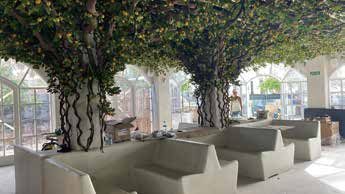
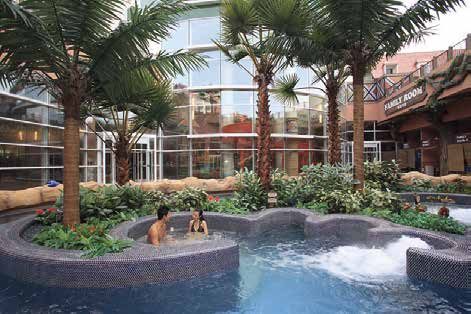
Real restaurant installations — on-site photographs, no mock-ups.
Planning boxwood for a restaurant?
Send the coverage area, quantity, installation setting and the fire or UV grade your project requires. We will reply with a 3D render route, unit pricing at your quantity and lead time — normally within 24 hours on business days.
Sister brand · GardenStone
Pair it with landscaping stone (GardenStone)
From the same supplier group — GardenStone supplies decorative pebbles, gravel and landscape stone that complete the same hotels, resorts, malls and restaurants. One source for the whole landscape.
Explore GardenStone →