How Do You Place a Faux Plant Pot Bulk Order?
A faux plant pot bulk order runs through five steps: fix the models and diameters (30–150 cm in our fibreglass range), approve a 1-piece sample, confirm the quotation line by line, lock the lead time — 7–15 days for stock models, 20–45 days for custom finishes — and nest-pack the pots into a mixed container with the trees they carry.
October 9, 2026 · Buying & Sourcing · 8 min read · By Everflorae Editorial Team
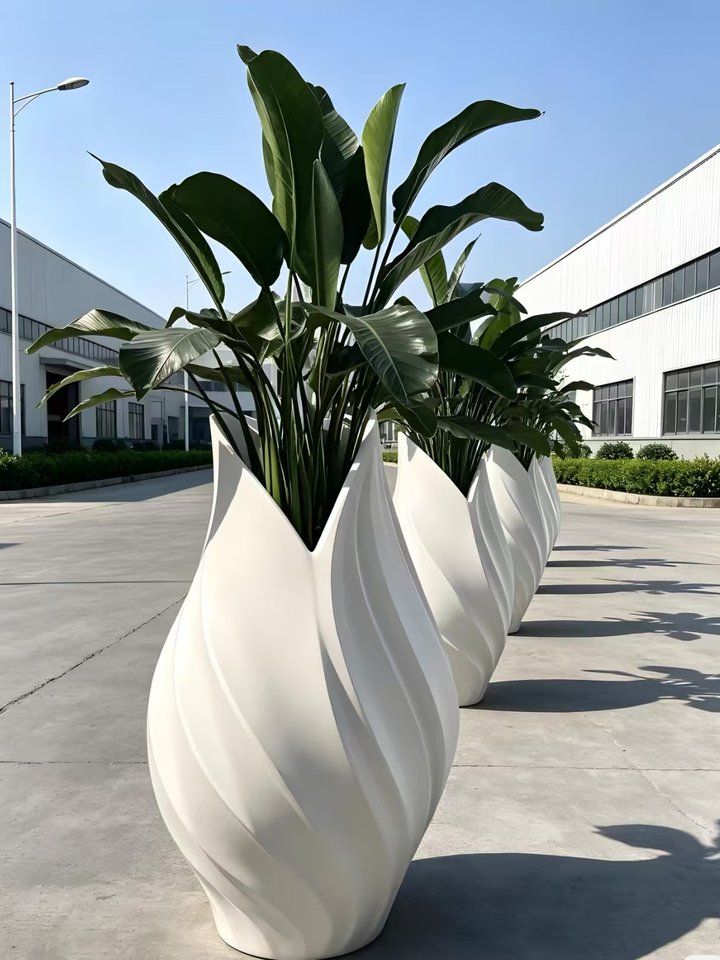
- Sampling starts at 1 piece; production runs are quoted from 10 pieces per size and finish.
- Diameters run 30–150 cm in our fibreglass range; finishes are matte, gloss, stone-effect or a custom RAL match.
- Lead times: 7–15 days for stock models after sample approval, 20–45 days for custom sizes or finishes.
- An artificial plant planter price is driven by diameter, finish, base treatment and packed volume — ask for each line separately.
- Nested packing is the single biggest lever on landed cost, so ask how the pots pack before you compare quotations.
The five steps of a faux plant pot bulk order
The buyers who get bulk pot orders right are rarely the ones with the biggest quantities — they are the ones who fix five things in the right sequence. Skip a step and the error surfaces at packing or on site, where it costs the most.
Step 1 — Fix the schedule of pots. List each model with its diameter, finish and whether it must carry a tree, and note the tree height it has to hold. Our planters and bases range runs from 30 cm to 150 cm in diameter, and a 3-metre tree and a 9-metre palm put very different demands on the same-looking pot. The schedule is the document everything else is quoted against.
Step 2 — Sample at 1 piece. One physical pot settles the questions a photograph cannot: the real gel-coat colour under your site lighting, the wall stiffness, the rim detail, how the tree sits and whether the base needs weighting. Sampling from 1 piece is standard precisely so that this decision costs almost nothing.
Step 3 — Confirm the quotation line by line. A serious quotation shows unit price per model, tooling or colour-matching charges if any, packing dimensions and units per carton, and the freight basis. If any of those lines is missing, the number you received is not yet a price — it is an estimate.
Step 4 — Lock the lead time in writing. Stock models ship in 7–15 days after deposit and sample approval; custom sizes or finishes take 20–45 days. Agree the start point — deposit received, sample approved — because that is where most delivery disputes begin.
Step 5 — Plan the container. Decide early whether the pots consolidate with the trees, palms or green walls from the same project in a mixed container, or carry a container of their own. This decision changes the packing spec, so it belongs before production, not after.
What drives an artificial plant planter price
An artificial plant planter price is not one number pulled from a list — it is the sum of four decisions, and knowing them lets you compare quotations from different factories on equal terms.
Diameter and height. A 150 cm floor planter consumes several times the material of a 40 cm pot and spends far longer in the mould. Across a bulk order, moving two models down one size step often recovers more cost than any volume discount negotiation.
Finish. Matte and gloss gel-coat are the standard finishes because they come straight off the mould. A stone-effect finish adds process steps, and a custom RAL or Pantone match adds a colour-matching round with a sealed reference sample — usually worth it for a hotel or mall brand colour, but it belongs in the price as its own line.
Base treatment. A plain pot cover is the cheapest configuration. Adding a weighted steel plate or concrete fill for wind stability, or a bolt-down plate for rooftop and coastal installations, adds material, weight and labour — and it is exactly what an oversized tree in an exposed position needs. Specify the fixing requirement at quotation stage, not after delivery.
Packed volume. Because freight is charged on space, the carton dimensions and nesting behaviour of each model are part of its real price. Two factories can quote the same unit price and land at different totals once the containers are counted.
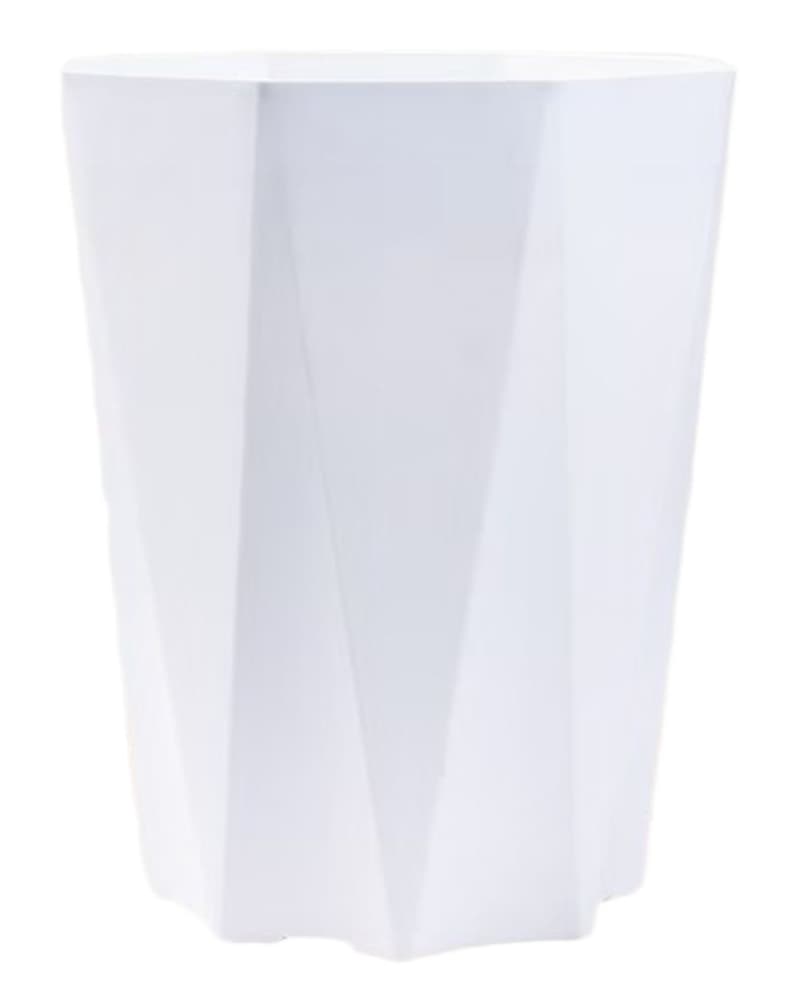
Stock pots versus custom pots
A stock pot is one the factory already moulds in a finish it already holds — the setup cost is sunk, so the price is close to raw material plus cycle time plus packing. A custom pot introduces a new size, a new mould or a matched colour, and the quotation picks up that setup as a separate line. Neither is better; they answer different briefs.
The practical pattern on real projects: specify stock models for the first bulk order, so the schedule, the sample and the container all move quickly, and hold genuinely custom planters for the second order, once quantities justify the mould or the colour-matching round. We describe this split, and the per-model minimum behind it, in more detail in our guide to artificial plant planter MOQ.
If the project genuinely needs a bespoke pot from day one — an unusual diameter, an integrated planter-seat, a brand colour — send the drawing before asking for a price. Our custom and OEM service quotes tooling and unit price as separate lines precisely so the decision can be made on numbers rather than on a guess.
Nesting and freight: what actually decides the landed cost
Pots are the bulkiest item in most artificial plant shipments. A large floor planter can weigh very little while occupying a great deal of container space, which means a container fills on volume long before it fills on weight — and freight is charged on the space.
This is why packing is a specification, not an afterthought. Our pots are nested where the shape allows, which is most tapered and round profiles; a nested set of five 40 cm pots occupies roughly the space of one, and the tapered profile is part of why it can nest at all. Rigid one-piece cylindrical forms and wide square planters nest poorly and should be priced with their real carton volume in mind.
Three questions to ask before comparing quotations: how many units per carton, what the carton dimensions are, and whether the pots ship nested or single-packed. The answers move the landed cost per pot more than most unit-price negotiations do — and they are free to ask.
Lead times and the documents to lock first
Two documents should be agreed before the moulding run starts. The first is the sealed finish reference — the actual gel-coat colour panel, signed by both sides — because colour is the dispute that is cheapest to prevent and most expensive to resolve after a 150-unit run. The second is the packing specification with carton dimensions and units per carton, because that is what the freight quotation and the site delivery schedule both depend on.
One compliance note that bulk buyers get wrong: the pot itself — fibreglass, metal or stone composite — is normally not the component carrying the fire rating; the foliage planted in it is. Fire-retardant foliage is tested to NFPA 701, BS 5867 or EN 13501-1 depending on your market, and outdoor installations need UV-stabilised foliage with colour-fastness good for 3–5 years rather than a darker pigment. State indoor or outdoor use in the enquiry and ask which certificate applies to which component, so the documents you receive match the goods on site. Our compliance page summarises which standard fits which market.
Frequently asked questions
What is the minimum for a faux plant pot bulk order?
How is an artificial plant planter price calculated?
How long does a faux plant pot bulk order take?
Can faux plant pots ship together with the artificial trees?
Sources & attributed quotations
Named sources behind this guide. The quotations below are verbatim from the issuing bodies, with outbound links to the official pages.
“This standard establishes test methods to assess the propagation of flame of various textiles and films under specified fire test conditions.”
— NFPA (National Fire Protection Association), NFPA 701, Standard Methods of Fire Tests for Flame Propagation of Textiles and Films (2023 edition), official source
“The United Nations Comtrade database aggregates detailed global annual and monthly trade statistics by product and trading partner for use by governments, academia, research institutes, and enterprises. Data compiled by the United Nations Statistics Division covers approximately 200 countries and represents more than 99% of the world's merchandise trade.”
— United Nations, UN Comtrade Database, official source
- NFPA — NFPA 701, Standard Methods of Fire Tests for Flame Propagation of Textiles and Films
- UN Comtrade — global annual and monthly trade statistics by product and trading partner
- Everflorae — Fire & UV Compliance Documentation
Related pages
Related project cases
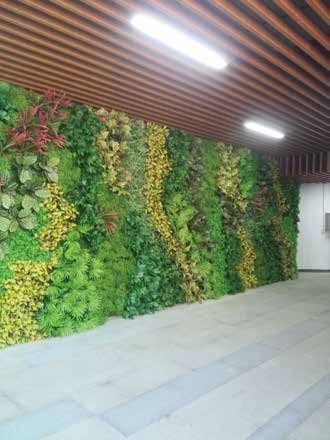
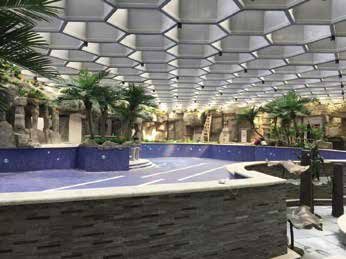
Real projects we have delivered in this kind of setting — on-site photographs, no mock-ups.
Planning a faux plant pot bulk order?
Send the pot schedule — diameters, finishes, the tree heights they must carry — and we will return a line-by-line quotation with packing data and lead time, usually within 24 hours on business days.