What Is the MOQ for Artificial Plant Planters?
There is no single MOQ for artificial plant planters. Sampling starts at 1 piece, stock planter sizes can normally be added to a mixed container alongside trees or green wall panels, and only a fully custom planter — a new size, finish or mould — carries a per-model minimum, because tooling and colour matching come first. Standard models ship in 7–15 days; custom work takes 20–45 days.
October 5, 2026 · Buying & Sourcing · 8 min read · By Everflorae Editorial Team
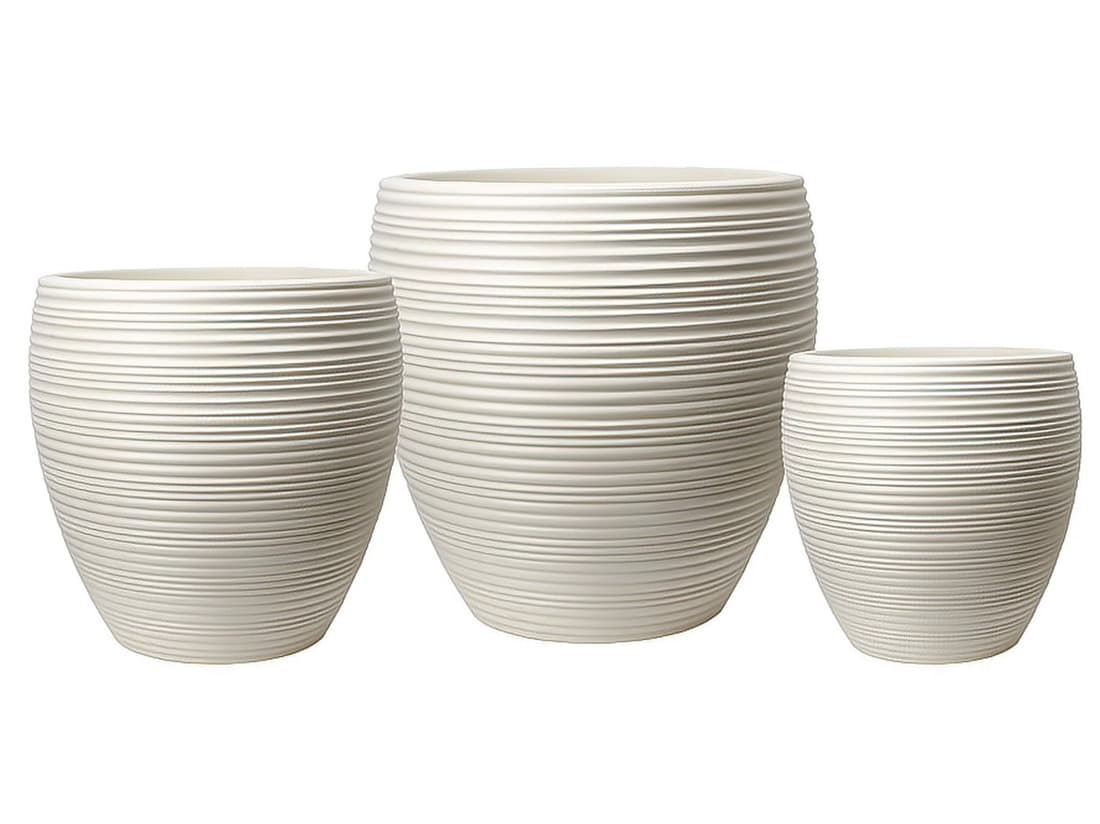
- Sampling starts at 1 piece — approve the finish, wall thickness and dimensions before committing to any quantity.
- Stock planters carry no fixed unit minimum in practice; the real constraint is container volume, so they are usually consolidated into a mixed shipment.
- Only custom planters carry a per-model minimum, because a new size, colour or mould has to be prepared before production starts.
- Always ask for the minimum per model, not per order — a supplier quoting one figure for both is quoting two different things.
- Lead times: 7–15 days for standard models after deposit and sample approval, 20–45 days for custom work.
Why there is no single MOQ for artificial plant planters
Buyers usually arrive at this question after two suppliers quote two different numbers, which is the clearest sign that MOQ is not one figure. A planter is a bulky, low-density item, so what a factory actually needs to run economically is a filled mould cycle and a filled container — not a fixed count of units. That is why the honest answer depends on which of three situations the order falls into.
The first is sampling: 1 piece, so the buyer can check the finish, the wall thickness, the drainage detail and how the planter sits under a planted tree. The second is stock sizes — a planter the factory already moulds, in a finish it already holds — where the practical question is how much container space the planters take alongside everything else in the shipment. The third is custom work, where a new size, a new finish or a mould that does not exist yet has to be prepared, and the minimum is set by that setup rather than by the planter itself.
Our planters and bases range covers the stock side of that split, and custom and OEM work covers the third. Knowing which of the three you are asking about is what turns a vague MOQ question into a quotable one.
Stock planters versus custom planters: where the minimum comes from
A stock planter is one the factory already produces — an existing mould, an existing finish, an existing packing carton. Because the setup cost is already sunk, there is no technical reason for a large unit minimum, and the only thing that has to work is the logistics: the planter has to travel in the same container as the rest of the order. This is why artificial plant planter pot wholesale orders are normally consolidated — planters ship with trees, palms, foliage or green wall panels in one mixed container, and each line contributes its own volume.
A custom planter is different. If the size does not exist, a mould has to be built; if the finish does not exist, a colour or gel-coat reference has to be matched and approved; if the wall section changes, the packing carton changes too. Each of those steps has a setup, and the per-model minimum exists to make that setup worth running. It is not an arbitrary gate — it is the reason the unit price on a custom planter falls so sharply once you pass it.
The useful question to ask a supplier is therefore not "what is your MOQ" but "what is the minimum per model, and which of my models are stock and which are custom". Those two numbers are not the same, and a quotation that gives one figure for both is usually a stock-only supplier or a trading company that has not checked with the factory.
Why volume, not units, sets the practical minimum
Planters are the classic bulky cargo of this trade. A large floor planter may weigh very little but occupy a great deal of space, which means a container fills up long before it reaches its weight limit, and the freight is charged on the space. That has a direct consequence for MOQ: the number that matters is cubic metres, and two orders of "200 planters" can be completely different propositions depending on size.
The practical implication for a first order is to consolidate rather than to negotiate. Putting planters, trees and green wall panels into one container lets the planter quantity stay modest while the freight still works, because the dense items pay for the space the bulky ones consume. On the second order, once the planter models are proven, the planter line can usually carry its own container and the per-unit freight falls on its own.
One more specification detail changes the arithmetic: nesting and stacking. Planters that nest inside one another, or that pack flat with a separate base, use materially less container volume than rigid one-piece forms of the same finished size. If a project is container-limited rather than budget-limited, asking how the model packs is often worth more than negotiating the minimum.
How to keep a first planter order small
Four moves reliably lower the effective minimum without weakening the order. First, sample before you commit: 1 piece is enough to approve finish and build quality, and it converts the specification from a photograph into a physical reference both sides hold. Second, specify stock sizes for the first shipment and keep genuinely custom planters for the second, when the volume justifies the setup. Third, consolidate — ship planters with the trees or green walls from the same project so one container covers the whole package. Fourth, standardise the finish across sizes, because a single finish running across three planter sizes is cheaper and faster than three separate colour runs.
Where a project genuinely needs a custom planter from the start, ask for the tooling cost and the per-model minimum separately. Keeping those two lines apart makes it possible to judge whether the custom work pays for itself at the project's real quantity, rather than discovering it after the mould is built.
Lead times and what happens after approval
Standard planter models ship in 7–15 days after deposit and sample approval. Fully custom work takes 20–45 days, because the mould or finish is prepared first and a colour reference has to be approved before production begins. Where a project hands over in phases, deliveries can usually be split across dates so planters arrive with the planting programme rather than months ahead of it.
Two documents should be agreed before production, and both are cheap to agree and expensive to dispute later: a sealed finish reference (wet, where the planter will be seen wet) signed by both parties, and a packing specification stating carton dimensions and how many units per carton, because that is what determines the freight figure in the quotation. We ship to more than 50 countries, and the packing data is the part that most often decides whether a landed cost holds or moves.
Planters also interact with the compliance question in a way buyers often get wrong. The planter itself — fibreglass, metal or stone composite — is not normally the item carrying the fire rating; the foliage planted in it is. Fire-retardant foliage is tested to NFPA 701, BS 5867 or EN 13501-1 depending on your market, and outdoor installations need UV-stabilised foliage rather than a darker pigment. State indoor or outdoor use in the enquiry, and ask which rating applies to which component, so the certificate you receive actually matches the item on site.
Frequently asked questions
What is the MOQ for artificial plant planters?
Can I order artificial plant planters wholesale in small quantities?
How long does an artificial plant planter order take?
Do planters need a fire rating or UV grade?
Sources & attributed quotations
Named sources behind this guide. The quotations below are verbatim from the issuing bodies, with outbound links to the official pages.
“The United Nations Comtrade database aggregates detailed global annual and monthly trade statistics by product and trading partner for use by governments, academia, research institutes, and enterprises. Data compiled by the United Nations Statistics Division covers approximately 200 countries and represents more than 99% of the world's merchandise trade.”
— United Nations, UN Comtrade Database, official source
- UN Comtrade — global annual and monthly trade statistics by product and trading partner
- International Trade Centre (ITC) — Trade Map market access and trade flow data
- Everflorae — Fire & UV Compliance Documentation
Related pages
Related project cases
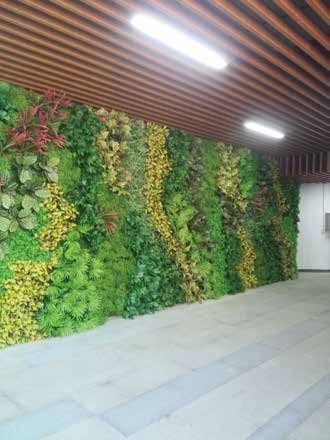
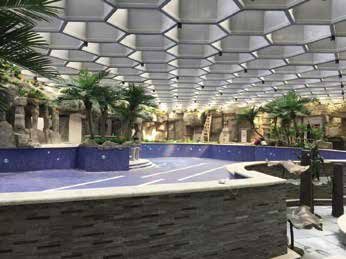
Real projects we have delivered in this kind of setting — on-site photographs, no mock-ups.
Want the planter MOQ for your models?
Tell us the planter sizes, finish and whether the order is stock or custom, and we will quote the per-model minimum, the lead time and the packing data — usually within 24 hours on business days.