Artificial Green Wall vs Live Wall: What Does It Cost?
An artificial green wall is priced per square metre: panels from a 50 m² MOQ, shipped in 7–15 days, with no irrigation, drainage or horticultural contract attached. A live wall adds growing medium, a watering system, waterproofing and ongoing maintenance. In poor light or hard-to-reach interiors the artificial wall usually costs less over five years; outdoor walls with existing irrigation can favour living plants.
October 16, 2026 · Comparisons · 8 min read · By Everflorae Editorial Team

- Modular panels are priced per square metre; engineered walls are quoted from the elevation drawing, because framing, access and height change the cost far more than the greenery itself.
- A live wall carries cost lines an artificial wall never sees: irrigation and drainage, waterproofing, structural loading for wet soil, grow lighting indoors, and a horticultural maintenance contract.
- The artificial wall's recurring cost indoors is close to zero — occasional dusting, no water, no pruning, no plant replacement.
- Outdoors, the artificial wall is a scheduled-refresh product: UV-stabilised foliage holds its colour for 3–5 years in direct sun.
- Fire compliance travels with the product: flame-retardant foliage to NFPA 701, BS 5867 or EN 13501-1, with the test report issued per order.
What does an artificial green wall actually cost to buy?
Start with the honest version, straight from how the line is quoted: modular panels are priced per square metre, and engineered walls are quoted from your elevation drawing — because framing, access and height change the cost far more than the greenery itself. That one sentence covers both systems. The artificial wall's purchase price is a manufacturing quotation for foliage, backing, frame and packing, and everything after it is installation.
For panels, four things move the number. Format: square 1 × 1 m panels are the standard, with 85 × 85 cm, 50 × 100 cm and round Ø50–75 cm mats alongside; custom sizes are made to project drawing. Density and mix: roughly 90–120 stems per m² depending on species, chosen from fifteen named mixes in the catalogue. Backing system: galvanised iron mesh for outdoor and flame-retardant builds, EPE foam plus iron mesh for indoor work, plastic mesh for UV outdoor lines. Fire grade: flame-retardant foliage to NFPA 701, BS 5867 or EN 13501-1 is specified per foliage type, with the test report issued per order. The panel MOQ is 50 m², and at roughly 4–6 kg per m² a first order palletises flat into a predictable freight volume. The green walls & hedges range lists the current formats and specifications.
Engineered walls add the parts a panel cannot carry: a concealed frame sized to the elevation, a panel layout that works around columns and returns, fixing details for your wall build-up, and a pre-crate assembly check. That is why they run 20–40 days against the 7–15 day panel window — and why a 4,600 m² facade and a 12 m² reception wall are quoted the same way, from the drawing rather than from a generic rate card. If the programme is tight, an engineered frame built from stock panels trims weeks off a fully bespoke build while keeping the edge-to-edge result.
What does a live wall cost that an artificial one does not?
A living wall is a mechanical system with plants in front of it. The invoice for the plants is one line among several, and the others recur:
- Water infrastructure. Irrigation lines, pumps, filters, a drain, and waterproofing behind the wall — installed once, maintained for the life of the wall.
- Structure. Saturated growing medium is heavy; taller walls need a loading check before the frame goes up.
- Light. Most commercial interiors cannot keep living foliage healthy on ambient light, so supplementary grow lighting — and the electricity to run it — becomes part of the fit-out.
- The horticultural contract. Scheduled visits for watering checks, pruning, feeding, pest control and replanting, priced per year, indefinitely.
- Access and downtime. Every visit needs lift access or out-of-hours work in an atrium — a facilities cost that arrives before the gardener does.
- Replacement. Plants decline unevenly, so dead pockets are swapped piecemeal and the wall usually gets a larger refresh within a few years.
None of this makes a live wall a bad product. It cools and humidifies the air, it is a genuine sustainability statement, and some properties want that story badly enough to fund it — a legitimate choice when it is priced honestly at design stage. The comparison only turns misleading when the live wall is quoted as if it were a picture to hang. The wall itself is the cheapest part of living greenery.
How do the two walls compare over five years?
Comparing artificial green wall vs live wall cost over five years comes down to a list of cost lines rather than a single figure — currency numbers change by market, but the structure of the spend does not:
| Cost line | Artificial green wall | Live wall |
|---|---|---|
| Purchase & installation | One manufacturing quotation, fixed at order | Wall system, growing medium, irrigation, drainage, waterproofing, lighting |
| Water & electricity | None indoors | Continuous — irrigation, pumps, grow lighting |
| Maintenance | Occasional dusting; a hose rinse outdoors once or twice a year | Contracted horticultural visits, all year round |
| Replacement | None indoors; outdoor foliage on a 3–5 year UV refresh cycle | Uneven plant decline, piecemeal replanting, periodic refresh |
| Compliance | Fire test report issued per order (NFPA 701 / BS 5867 / EN 13501-1) | Soil, drainage and waterproofing approvals in many fit-outs |
| What can go wrong | Nothing after installation | Leaks, pests, plant death in low light; a visibly tired wall between visits |
Read down the right-hand column and a pattern appears: the artificial wall concentrates its cost at purchase, while the live wall spreads its cost across the operating years — and the spread widens in exactly the environments commercial projects put walls in. A windowless mall corridor, an air-conditioned reception and a tall atrium reached only by lift are all hostile to living foliage, and every hostile condition converts directly into maintenance and replacement spend.
When is a living wall still the better buy?
We manufacture artificial greenery, so it is worth being clear about where we would not buy it either. Outdoors, where irrigation, natural light and a gardening team already exist, a live hedge or planted bed is often the cheaper line — the recurring costs are already funded elsewhere in the building budget. Facades with structure ready for planted systems, and properties that want a living-wall story in their brand or sustainability documentation, are equally legitimate choices.
Everywhere else — mall corridors, restaurant and café interiors, office receptions, hotel spas, basement levels and windowless back-of-house — the artificial wall wins the five-year comparison because its recurring lines are close to zero. That is also where most export orders for this line end up.

How do you keep the artificial wall's cost advantage?
The advantage survives only if the product is specified honestly. Four confirmations do most of the work:
- Match the grade to the environment. UV-stabilised outdoor foliage is rated to hold its colour for 3–5 years in direct sun — treat an exterior wall as a scheduled-refresh item and the refresh lands on your asset plan instead of arriving as a surprise.
- Name the fire standard at quotation. Flame-retardant foliage to NFPA 701, BS 5867 or EN 13501-1 is allocated inside the normal schedule when it is specified up front; discovering the requirement after production is the most expensive way to buy re-work. The 3–5 year colour rating itself is anchored in fluorescent-UV weathering tests of the kind specified by ISO 4892-3 and ASTM G154.
- Buy from the manufacturer, not a reseller. Panel orders ship on a 50 m² MOQ with interlocking panels on a shared mounting grid, so a phase-two reorder matches phase one exactly. Specimen trees from 1 m up to 15 m are built in the same workshop for projects that pair a wall with a statement tree.
- Plan the freight before the schedule. At 4–6 kg per m², panels palletise flat; the crates for an engineered wall follow the frame design. Get the packed volume with the quotation, not after the goods are packed.
Our artificial green wall lead time guide covers the schedule side in detail, and the TCO comparison for commercial projects applies the same arithmetic to specimen trees and planters.
How do you buy an artificial green wall wholesale?
Buying artificial green wall wholesale is a four-line enquiry, and the quotation comes back normally within 24 hours on business days. Send the wall area in m² or the elevation drawing, the formats you want from the stock range, the fire standard your authority requires, and the target installation week.
Stock panels are produced continuously in fifteen named mixes across square 1 × 1 m, 85 × 85 cm, 50 × 100 cm and round Ø50–75 cm formats, so a wholesale order is an allocation of production slots rather than a new product build. Engineered walls are quoted from the drawing, and export packing — panels flat-palletised, engineered frames crated — is part of the quotation. The line has been manufactured in the company's 12,000 m² Guangzhou factory since 2012, with export documentation handled from the Dalian sales office. For choosing between formats before you enquire, the panels vs hedges buying guide sets out the specification differences.
Frequently asked questions
Is an artificial green wall cheaper than a live wall?
How is an artificial green wall priced?
How long does an artificial green wall last?
Is an artificial green wall suitable for fire-regulated interiors?
Sources & attributed quotations
Named sources behind the durability and trade context used in this guide. The quotations below are verbatim from the issuing bodies, with outbound links to the official pages.
“This document specifies methods for exposing plastic specimens to fluorescent UV lamp radiation, heat and water in apparatus designed to simulate the weathering effects that occur when plastic materials are exposed in actual end-use environments to global solar radiation, or to window-glass filtered solar radiation.”
— ISO (International Organization for Standardization), ISO 4892-3:2024, Plastics — Methods of exposure to laboratory light sources — Part 3: Fluorescent UV lamps, official source
“The United Nations Comtrade database aggregates detailed global annual and monthly trade statistics by product and trading partner for use by governments, academia, research institutes, and enterprises.”
— United Nations Statistics Division, UN Comtrade Database, official source
- ISO — ISO 4892-3:2024, fluorescent UV lamp exposure of plastics
- ASTM — ASTM G154-23, operation of fluorescent UV lamp apparatus
- United Nations Statistics Division — UN Comtrade Database
- International Trade Centre — Trade Map
- Everflorae — Fire & UV Compliance Documentation
Related pages
Related project cases
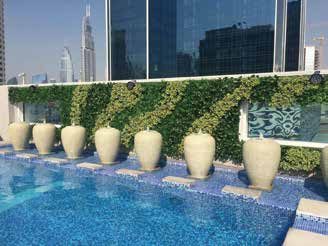
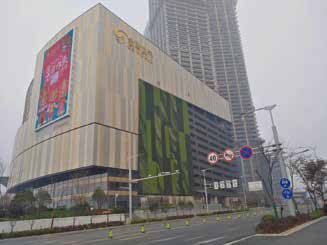
Real projects we have delivered in this category — on-site photographs, no mock-ups.
Comparing walls for a live project?
Send the wall area in m² or the elevation drawing, your fire standard and the target installation week. We will come back with the panel or engineered-wall quotation and the packed freight volume — normally within 24 hours on business days.
Sister brand · GardenStone
Pair it with landscaping stone (GardenStone)
From the same supplier group — GardenStone supplies decorative pebbles, gravel and landscape stone that complete the same hotels, resorts, malls and Japanese gardens. One source for the whole landscape.
Explore GardenStone →