How Do You Source Artificial Orchid Wholesale?
Artificial orchid wholesale buying starts with the specification, not the price list: approve a 1-piece sample, confirm foliage materials and the fire standard, then book production — 7–15 days for stock phalaenopsis lines and 20–45 days for custom colours or engineered arrangements, with wholesale price quoted per stem or per pot on your order quantity.
October 8, 2026 · Buying & Sourcing · 8 min read · By Everflorae Editorial Team
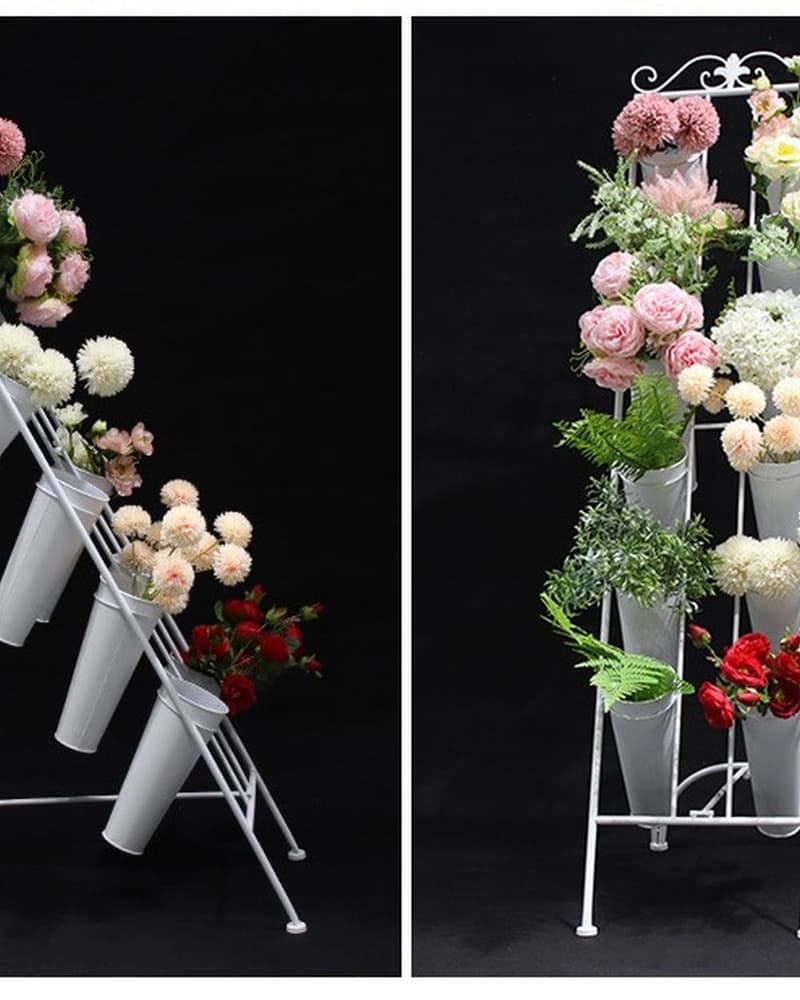
- Sampling starts from 1 piece, so a single approved pot or stem locks the specification before any production slot is booked.
- Stock phalaenopsis lines are ready in 7–15 days; custom colours, engineered arrangements or special pots run 20–45 days.
- Wholesale price moves with bloom count, stem height, foliage grade, pot material and order quantity — not with a public list.
- Fire-rated foliage is available to NFPA 701, BS 5867 and EN 13501-1; name the standard at quotation and ask for the certificate.
- UV-stabilised outdoor foliage holds its colour for 3–5 years in direct sun, which matters for landside planting near glazing.
What does artificial orchid wholesale actually cover?
Wholesale orchid buying covers three product families, and it pays to name yours at enquiry stage. First, potted orchids: phalaenopsis (moth orchid) plants set in ceramic, plastic or fibreglass pots, the format most hotel and office programmes reorder by the pallet. Second, individual stems: single orchid stems bought by the box for arrangers, event companies and retailers who build their own displays. Third, engineered arrangements: planted orchid compositions built into planters, troughs or wall pockets to a drawing, which behave like any other engineered product on lead time.
The materials side is simpler than it looks. Petals are typically silk-touch polyester on a wire-reinforced spine; leaves are ABS (injection-moulded) or PU (cast) foliage; stems are plastic-wrapped steel or plastic rod. Because leaf material is specified per line, the same orchid family can be quoted as an indoor programme grade or as a UV-stabilised outdoor grade — the difference is real, so write the intended location into the specification rather than leaving the factory to guess.
Buyers who search for artificial orchid wholesale usually fall into two camps: procurement teams buying a repeating programme for hotel rooms, restaurants and retail displays, and fit-out contractors buying one engineered batch for a project handover. Both are served from the same artificial flowers range, but the quotation logic differs, and the next two sections explain how.
How is artificial orchid wholesale priced?
There is no honest universal price list for artificial orchids, and a supplier who quotes one number for "orchids" without a specification is quoting an average of things you have not chosen yet. Wholesale price moves on five variables, all of which you control at specification stage:
Bloom count and stem height. A 5-bloom phalaenopsis stem uses more petals, more wire and more labour than a 3-bloom stem, and price follows the specification, not the word "orchid".
Foliage grade. ABS injection-moulded leaves, PU cast leaves and fabric leaves sit at different cost levels and behave differently in service. Fire-retardant treatment is specified per foliage type and adds cost; it is an option, not a stock default.
Pot and base material. Ceramic, plastic and fibreglass pots price differently, and an engineered planter with a fixed base is quoted as part of the arrangement, not as an accessory.
Order quantity. Unit price falls as quantity rises because tooling, colour batching and packing are spread across the run. A sample piece is quoted at sample cost; a 500-pot programme is quoted on production economics.
Fire and UV specification. Naming NFPA 701, BS 5867 or EN 13501-1 at quotation keeps the fire-retardant option inside the quoted window; adding it after production means re-work. The same logic applies to UV-stabilised grades for outdoor or high-glazing locations, rated to hold colour for 3–5 years in direct sun.
The practical takeaway: ask for an itemised quotation against your written specification and sample photos, and treat any number quoted before the specification exists as indicative only.
What is the MOQ and lead time for artificial orchid wholesale?
Sampling starts from 1 piece — one potted orchid or one stem, dispatched by air so you can judge petal feel, colour and pot finish in hand before committing. That single approved sample is the cheapest schedule insurance in this trade, because every downstream step keys off it.
After the sample is approved, the two production clocks are:
Stock lines: 7–15 days. Standard phalaenopsis lines in current colours and pot formats are a matter of allocating production slots and packing, counted from deposit and specification approval.
Custom work: 20–45 days. Non-standard colours, engineered arrangements built to a drawing, or special pots move the order into engineered production, where the extra time buys colour matching, frame and layout work, and a final assembly check before crating.
Ocean freight is quoted separately on packed volume to your port, so the delivery date you plan around is production lead time plus transit. If your installation date is fixed, plan backwards from it and put a buffer on top of the sea crossing — the same sequencing logic we describe in our artificial orchid lead time guide.
Which quality checks matter before you confirm a wholesale orchid order?
Four checks separate a smooth wholesale programme from an expensive one, and all four are cheap to run at sample stage:
Materials. Confirm the leaf material (ABS or PU), petal fabric and stem construction in writing. These determine cost, feel and fire behaviour, and they are the variables a quotation is actually priced on.
Colour fastness and UV. For indoor programmes, check colour consistency across the sample batch. For outdoor or high-glazing locations, specify UV-stabilised foliage rated for 3–5 years of direct sun, and ask how the rating was tested — the fluorescent UV lamp methods in ISO 4892-3 are the usual laboratory reference, cited in full in the sources section below.
Fire rating. If the venue is fire-regulated — hotels, airports, malls and most public interiors are — name the standard your authority requires: NFPA 701 (the usual US reference), BS 5867 (the usual UK curtain-fabric requirement) or EN 13501-1 (the European reaction-to-fire classification). Put the standard on the purchase order and request the certificate at quotation stage, not after production.
Pre-shipment inspection. Ask for QC photos of the packed goods before the container closes, and welcome a third-party inspection if your programme requires one. Both cost hours, not days, and either one catches a packing error while it is still a packing error.
What is the best artificial boxwood for an airport terminal?
Many buyers who source orchids for hospitality programmes also source greenery for transport interiors, so this is the second question worth answering properly. An airport terminal is the hardest test an artificial planting faces: 18–20 operating hours a day, thousands of touching hands, strict fire codes, and cleaning crews working to a schedule. The best artificial boxwood for an airport terminal is therefore specified on four criteria, in this order.
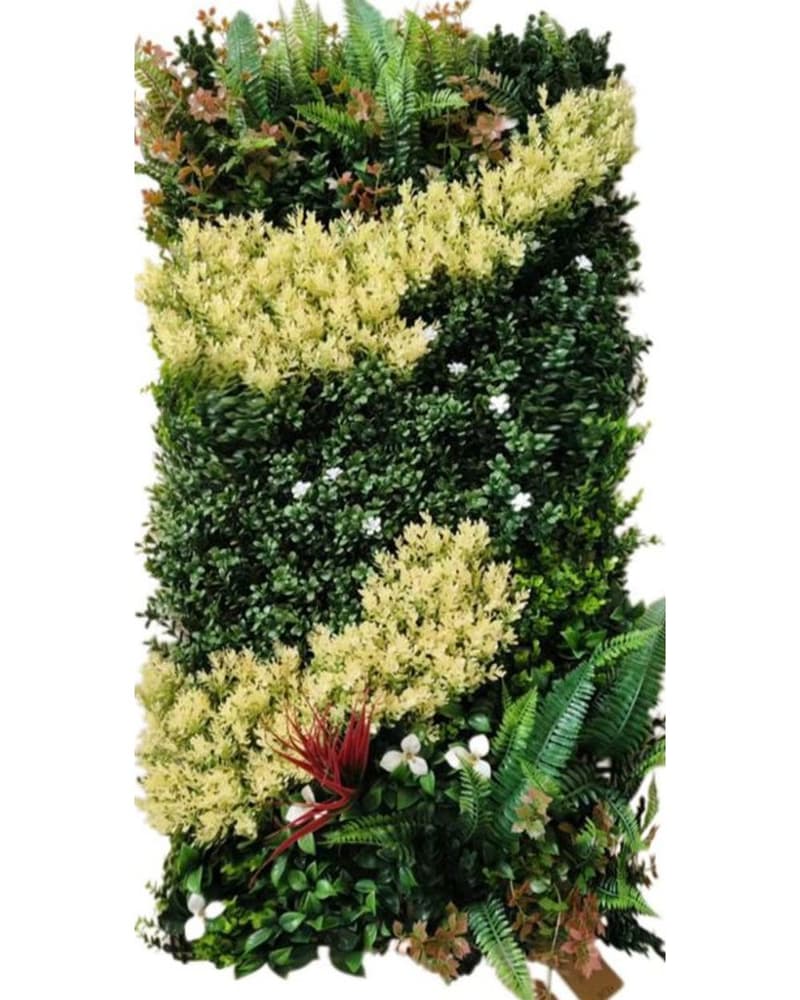
Fire rating first. Terminal authority names the standard — usually NFPA 701, BS 5867 or EN 13501-1 for foliage and panels. Specify it at quotation, take the certificate with the quotation, and put the standard on the purchase order: the same three-step discipline as for orchids.
Density and recovery second. Terminal boxwood takes contact from trolleys, luggage and cleaning machines. Dense, tightly clustered foliage on a solid backing recovers and does not show gaps; sparse panels are the ones that look tired within a year.
UV position third. Boxwood under skylights or beside full-height glazing takes real solar load, so those elevations need UV-stabilised foliage rated for 3–5 years of direct sun; shaded core zones can take standard indoor grade, and splitting the specification by elevation saves real money.
Maintenance fourth. Boxwood hedges in troughs and panels need no watering, no pruning and no lighting schedule: an occasional soft-brush dust indoors, a hose rinse outdoors once or twice a year. That near-zero upkeep is exactly why terminals specify artificial planting, and it belongs in the handover documents. Our green walls & hedges range covers the panel and hedge formats used in transport projects.
Frequently asked questions
What is the MOQ for artificial orchid wholesale?
How much do wholesale artificial orchids cost?
How long does a wholesale artificial orchid order take?
Is artificial boxwood suitable for an airport terminal?
Sources & attributed quotations
Named sources behind this guide. The quotations below are verbatim from the issuing bodies, with outbound links to the official pages.
“This standard establishes test methods to assess the propagation of flame of various textiles and films under specified fire test conditions.”
— NFPA (National Fire Protection Association), NFPA 701, Standard Methods of Fire Tests for Flame Propagation of Textiles and Films (2023 edition), official source
“This document specifies methods for exposing plastic specimens to fluorescent UV lamp radiation, heat and water in apparatus designed to simulate the weathering effects that occur when plastic materials are exposed in actual end-use environments to global solar radiation, or to window-glass filtered solar radiation.”
— ISO (International Organization for Standardization), ISO 4892-3:2024, Plastics — Methods of exposure to laboratory light sources — Part 3: Fluorescent UV lamps, official source
- NFPA — NFPA 701, flame propagation of textiles and films
- ISO — ISO 4892-3:2024, fluorescent UV lamp exposure of plastics
- Everflorae — Fire & UV Compliance Documentation
Related pages
Need a wholesale orchid quotation you can plan around?
Send the orchid type, pot format, quantity and target installation week — and the fire standard if the venue is regulated — and we will come back with an itemised quotation, sample terms and a production window, normally within 24 hours on business days.