How Do You Choose an Artificial Topiary Ball Manufacturer?
Choose an artificial topiary ball manufacturer by verifying three things: a welded galvanised steel frame, UV-stabilised ABS or PU foliage, and documented fire compliance. At Everflorae, spheres and sculpted forms span 0.5–5 m, sampling starts at 1 piece, and made-to-order lead time is 20–45 days including drawing approval.
November 4, 2026 · Buying Guide · 8 min read · By Everflorae Editorial Team

- An artificial topiary ball manufacturer welds the galvanised steel armature and dresses the foliage in its own workshop — so it controls form, grade and certificates, not just the resale.
- Verify a welded galvanised steel frame that holds its form from 0.5 m tabletop spheres up to 5 m sculpted columns.
- Require UV-stabilised ABS or PU foliage (3–5 year colour retention outdoors) and documented fire compliance — NFPA 701, BS 5867 or EN 13501-1 — where the local code demands it.
- Sampling starts at 1 piece; made-to-order lead time is 20–45 days including drawing approval, with standard catalogue spheres on the 7–15 day clock.
What a topiary ball manufacturer actually builds
A topiary ball looks simple — a sphere of foliage — but the product is two engineered halves. The first is the armature: a galvanised steel frame welded into the target form, sized from 0.5 m tabletop accents up to 5 m sculpted columns and brand shapes. The second is the surface: foliage tiles or moulded branches fixed to that frame in ABS or PU, with coverage density specified per project. A real artificial topiary ball manufacturer owns both steps. When the same workshop welds the frame and dresses the foliage, the diameter, symmetry and finish are controlled end to end; when a ball is merely traded from a third party, those variables are someone else's, and the reseller cannot change them for your specification.
This distinction matters most on larger forms. A 0.5 m boxwood sphere is forgiving; a 3–5 m sculpted column is a structural object that must stay upright, keep its proportions and survive handling and shipping. The manufacturer's weld quality, not the catalogue photo, decides whether it arrives straight.
How to vet a welded steel frame and foliage grade
When you shortlist an artificial topiary ball manufacturer, ask for evidence on the two things that fail in the field: the frame and the foliage. On the frame, confirm it is a welded galvanised steel armature (not a light wire cage), ask the wall-thickness or gauge for forms above 2 m, and request a photo of an in-build piece so you can see the weld pattern. On foliage, specify the grade for the setting: UV-stabilised ABS or PU for permanent outdoor use, with 3–5 year colour retention, versus an indoor grade where UV is not the constraint. Coverage density should be quoted, not assumed, because it drives both material and dress time.
A useful test at sampling: the 1-piece sample should be the same build as the production run. If the manufacturer offers a "sample quality" that differs from "production quality," the sample is not qualifying the product you will receive. At Everflorae the sample and the volume run move through the same welding, moulding and foliage-dressing stations, so the approved reference is the product.

Fire certification you should require
Topiary balls sit close to people — entrances, reception desks, dining terraces, event spaces — so fire behaviour is specified, not assumed. The honest question to put to any artificial topiary ball manufacturer is: can you supply foliage and frame tested to a named standard, with certificates filed? The three standards project specifiers ask for most are NFPA 701 (US), BS 5867 (UK) and EN 13501-1 (EU), and each is a per-order option that raises unit cost but is often mandatory for indoor public spaces. Treat a supplier who answers "fire retardant" without a named standard and a certificate as a risk, not a saving.
For the standards we work to, see the compliance page. A 1-piece sample can carry the same fire specification as the production batch, so compliance is qualified up front rather than discovered at inspection.
UV stability for outdoor placement
For exterior use — building entrances, rooftop terraces, courtyard features — the foliage grade has to be specified for permanent outdoor exposure: UV-stabilised ABS or PU foliage rated for exterior use with 3–5 year colour retention, plus rain-rated construction so the frame and fixings do not degrade. An artificial topiary ball manufacturer that runs its own outdoor-grade line can tell you the exact retention window and the test basis; a reseller often cannot. If your project is outdoors, write the UV grade and the retention years into the purchase specification, not just the diameter.
Sampling, MOQ and lead time
Because topiary balls are made to order, the ordering path starts small. The MOQ is 1 piece — you can approve a single sample sphere or sculpted form against your diameter, foliage and finish before any volume commitment. Made-to-order production runs 20–45 days including drawing approval, with a 3D render provided before production so the form and proportions are confirmed on screen before steel is cut. Standard catalogue spheres with no custom sculpting ship on the 7–15 day standard clock. If your installation date is fixed, state it at enquiry; the quotation will say which clock applies and when render approval is needed.
Manufacturer vs an artificial topiary ball supplier
The second keyword buyers pair with this topic is the artificial topiary ball supplier. The two are not the same. A manufacturer welds the armature and dresses the foliage in its own facility, so it can change the form, grade, finish and fire documents to your specification and stand behind them. A supplier may be a trader who buys finished stock from a third party and resells it; that is fine for standard, low-risk repeats, but it limits how far a piece can be customised and who is accountable when a certificate or dimension is wrong. If you need a specific diameter, a named fire rating, or a 1-piece sample built to your drawing, buy from a manufacturer or confirm in writing how the supplier sources, quality-checks and certifies the product. Both routes are valid; the mistake is assuming a supplier's "custom" means the same as a manufacturer's.
Questions to send for a structured quote
- Diameter and form (0.5–5 m). Sphere, tapered column, or a sculpted/brand shape — each sets the weld and foliage work.
- Indoor or outdoor setting. Outdoor means UV-stabilised ABS or PU foliage with 3–5 year colour retention.
- Foliage grade and coverage density. ABSandPU boxwood, moulded PU, or mixed foliage, at the density your project needs.
- Fire requirement. Name the standard — NFPA 701, BS 5867 or EN 13501-1 — and ask for the certificate.
- Quantity and date. A 1-piece sample first, then volume; tell us the installation date so we confirm the right lead time (20–45 days made-to-order, or 7–15 days for standard catalogue spheres).
Send those five lines and you will get a structured quotation that separates frame, foliage grade, fire documents and delivery — usually within 24 hours on business days. For brand shapes, the same path runs through OEM / ODM, with the 1-piece sample still applying and drawing approval protecting the form before volume.
Frequently asked questions
What should I check when choosing an artificial topiary ball manufacturer?
How much does a custom topiary ball cost?
How long does it take a manufacturer to produce a topiary ball?
Is an artificial topiary ball supplier the same as a manufacturer?
Sources & attributed quotations
Named sources behind this guide. The quotations below are verbatim from the issuing bodies, with outbound links to the official pages.
“This standard establishes test methods to assess the propagation of flame of various textiles and films under specified fire test conditions.”
— NFPA (National Fire Protection Association), NFPA 701, Standard Methods of Fire Tests for Flame Propagation of Textiles and Films (2023 edition), official source
“This document provides the reaction to fire classification procedure for all construction products, including products incorporated within building elements with the exception of power, control and communication cables which are covered by EN 13501-6.”
— CEN (European Committee for Standardization), EN 13501-1, Fire classification of construction products and building elements — Part 1: Classification using data from reaction to fire tests, official source
- NFPA — NFPA 701 standard page
- BSI — BS 5867-2:2008, flammability of curtain and blind fabrics
- CEN — EN 13501-1, reaction-to-fire classification
Related pages
Related project cases
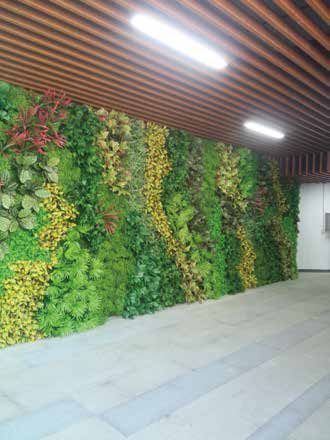
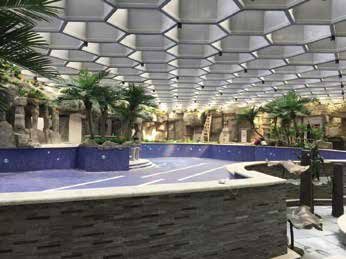
Real projects we have delivered in this kind of setting — on-site photographs, no mock-ups.
Specifying topiary balls for a project?
Send the diameter, the indoor or outdoor setting and any fire requirement, and we will return a structured quotation covering frame, foliage grade, fire documentation and delivery — usually within 24 hours on business days. Sampling starts at 1 piece, with a 3D render approved before production.
Sister brand · GardenStone
Pair it with landscaping stone (GardenStone)
From the same supplier group — GardenStone supplies decorative pebbles, gravel and landscape stone that complete the same hotels, resorts, malls and Japanese gardens. One source for the whole landscape.
Explore GardenStone →