What Is the MOQ for Artificial Topiary Balls?
The MOQ for artificial topiary balls at Everflorae is 1 piece — the topiary line is made to order, so a single sample sphere can be built before any volume commitment. Spheres and sculpted forms span 0.5–5 m on a welded galvanised steel frame; lead time is 20–45 days including drawing approval, and price is quoted per specification.
October 7, 2026 · Buying Guide · 7 min read · By Everflorae Editorial Team
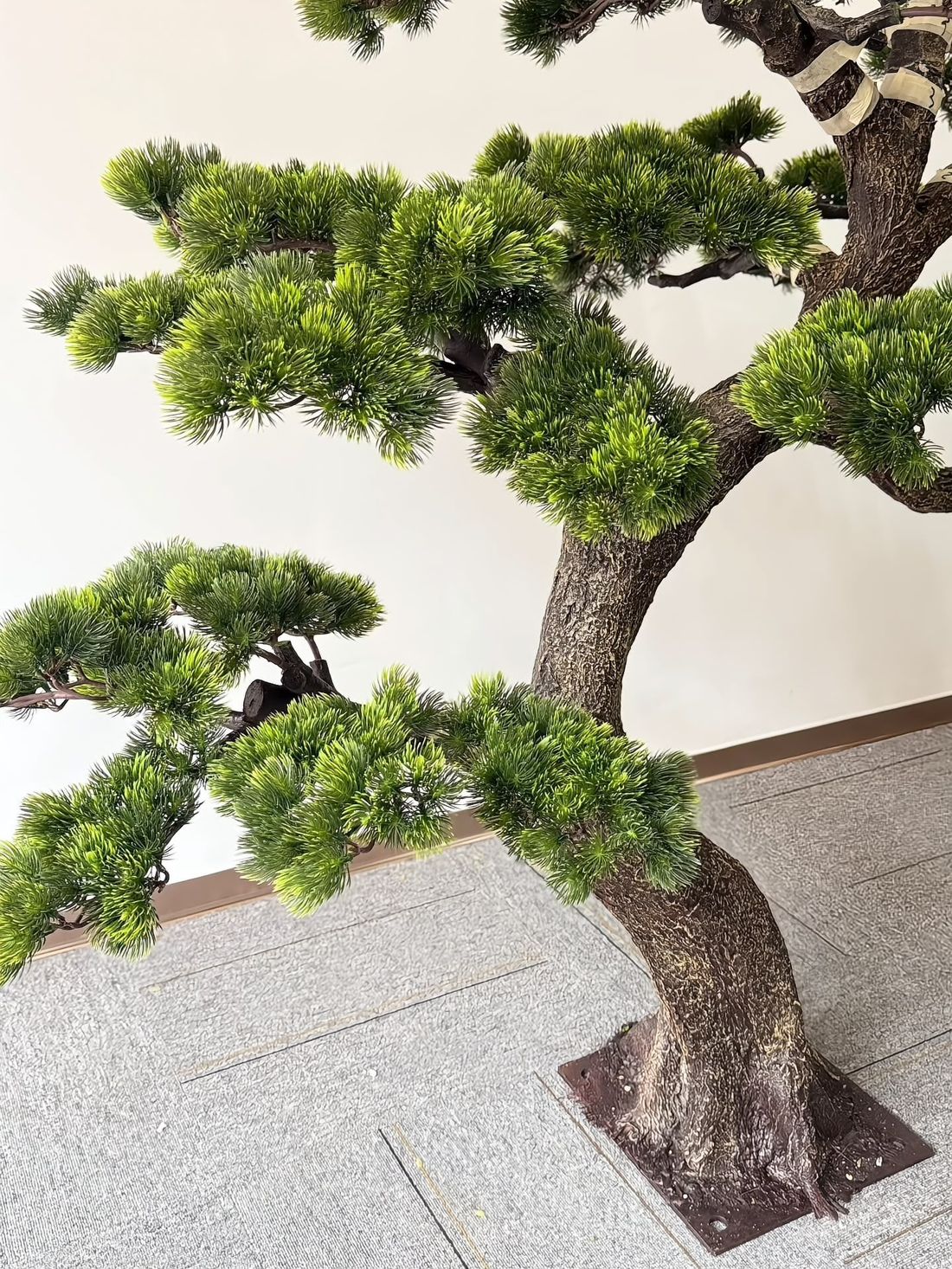
- The MOQ for artificial topiary balls at Everflorae is 1 piece — the line is made to order, not run from stock moulds.
- Spheres and sculpted forms span 0.5–5 m on a welded galvanised steel armature, surfaced with UV-stabilised ABS or PU boxwood or mixed foliage.
- Made-to-order lead time is 20–45 days including drawing approval, with a 3D render provided before production; standard catalogue items ship in 7–15 days.
- Per-piece price scales with diameter, foliage density and grade, finish, and the optional fire rating — not a fixed catalogue number.
What "MOQ" means on a made-to-order topiary line
MOQ — minimum order quantity — is the smallest batch a manufacturer will open a production line for. On a moulded, stock-standard product the number is high because the tooling has to be amortised across thousands of identical units. Artificial topiary balls do not work that way at Everflorae: each sphere or sculpted form is welded to shape from a galvanised steel armature and then dressed by hand, so there is no mould to pay off and no stock batch to join. The result is a line where the topiary ball MOQ is 1 piece — you can order a single 60 cm boxwood sphere or a 4 m sculpted column as a sample without negotiating an exception.
That does not mean every order is a one-off. Buyers typically follow a two-step pattern: approve a 1-piece sample against the project specification, then release a production run sized to the installation — a row of entrance spheres, a set of matching courtyard forms, or a repeat order for a hotel portfolio. Because the build process is identical for one piece and for fifty, the sample is not a cheaper approximation of the product; it is the product.
How MOQ scales with diameter and specification
Even on a 1-piece MOQ line, the specification still shapes the order. Three variables matter most:
- Diameter and form (0.5–5 m) — standard spheres at the smaller end of the range are the fastest to specify and the closest to a repeatable build. As the form grows toward 3–5 m, or departs from a sphere into a sculpted animal, column or brand shape, each piece becomes its own engineering task: more frame welding, more foliage coverage, more dress time. The MOQ stays at 1 piece, but the per-piece cost and the drawing-approval work rise with it.
- Foliage grade and coverage — a dense boxwood ball in UV-stabilised ABS uses more foliage tiles and more fixing time than a lighter mixed-foliage sphere. Coverage density is quoted, not guessed, because it drives both material and labour.
- Indoor vs outdoor grade — outdoor placement specifies UV-stabilised ABS or PU foliage with 3–5 year colour retention and rain-rated construction. A 1-piece outdoor sample carries the same grade as the production run, so the finish can be verified on the sample before volume is committed.
The practical takeaway for buyers comparing suppliers: ask what the quoted MOQ covers. A "low MOQ" on a bare stock sphere is not the same as a 1-piece MOQ on your actual diameter, foliage grade and fire specification.
What drives the per-piece price
The second question buyers pair with MOQ is artificial topiary ball price — and the honest answer is that there is no single list price, because every piece is built to specification. Per-piece cost is a sum of a few factors:
- Diameter — foliage coverage grows with the square of the radius, so a 1 m sphere uses far more than twice the material of a 0.5 m sphere. Price steps are not linear across the 0.5–5 m range.
- Foliage type and density — UV-stabilised ABS boxwood, moulded PU, or mixed foliage each carry different material costs; denser coverage adds both material and dress time.
- Frame complexity — a plain sphere is the simplest weld pattern; sculpted forms, tapered columns and brand shapes need more armature work.
- Finish — natural, gloss or matte finishes are specified per project and affect the foliage processing step.
- Fire rating option — documented compliance to NFPA 701, BS 5867 or EN 13501-1 (foliage and frame tested, certificates filed) is a per-order option that raises unit cost but is often mandatory for indoor public spaces.
To get a real number, send the diameter, the indoor or outdoor setting and any fire requirement; we return a structured quotation that separates frame, foliage grade, fire documents and delivery so the price is transparent rather than a black box. For the ordering process step by step, see our bulk topiary ball ordering guide and the topiary & sculpted forms product page.
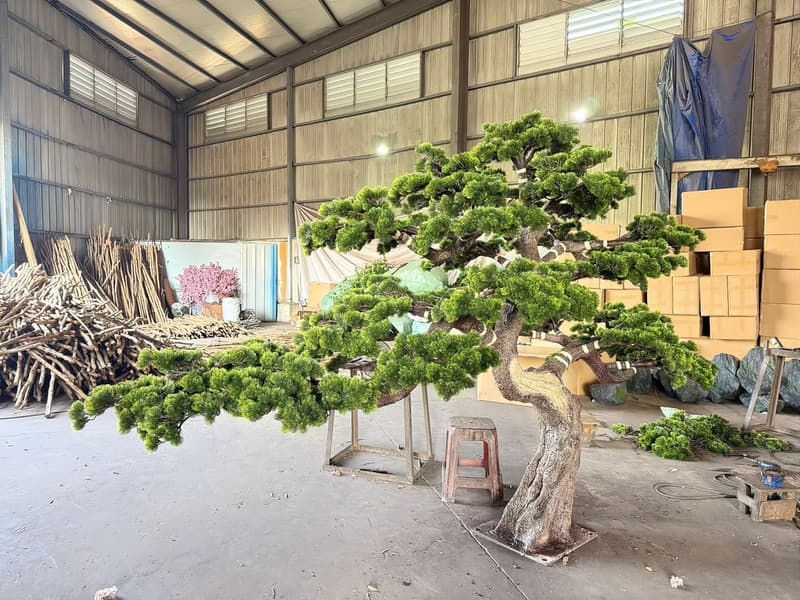
Lead time: 20–45 days including drawing approval
Because every topiary ball is built to order, the clock starts at specification, not at warehouse pick-up. Made-to-order topiary runs 20–45 days including drawing approval: the drawing or 3D render is confirmed first, then the frame is welded, foliage is dressed and QC checks the piece before packing. A 3D render is provided before production, so the form, proportions and foliage pattern are approved on screen before any steel is cut.
Standard catalogue items that need no custom sculpting — common sphere sizes in standard foliage — ship on the 7–15 day standard production clock. If your project has a fixed installation date, say so at enquiry; the quotation will state which clock applies and when the render approval is needed by.
Fire rating and UV options for topiary balls
Topiary balls usually sit where people pass close by — entrances, reception desks, dining terraces — so fire behaviour and UV stability are specified, not assumed. Fire rating is a per-order option: request foliage and frame tested to NFPA 701, BS 5867 or EN 13501-1 and keep the certificates on file for inspection. For outdoor placement, specify the UV-stabilised ABS or PU foliage grade with 3–5 year colour retention and rain-rated construction. A 1-piece sample can carry the same fire and UV specification as the production batch, so compliance is qualified up front. See the compliance page for the standards we work to.
How to order a 1-piece topiary ball sample
- Step 1 — send the specification. Diameter, indoor or outdoor setting, foliage preference and any fire requirement. One line is enough to start.
- Step 2 — receive a structured quotation. Frame, foliage grade, fire documents and delivery are listed separately, usually within 24 hours on business days.
- Step 3 — approve the 3D render. The form and proportions are confirmed on screen before production begins.
- Step 4 — approve the 1-piece sample, then release volume. Verify finish, density and certificates on the physical piece; the production run is built to the approved reference.
For brand-specific shapes — logos, animals, oversized columns — the same path runs through OEM / ODM: the 1-piece sample still applies, and the drawing approval protects the form before volume production.
Frequently asked questions
What is the minimum order quantity for artificial topiary balls?
How much does an artificial topiary ball cost?
How long does a made-to-order topiary ball take to produce?
Can artificial topiary balls be used outdoors?
Sources & attributed quotations
Named sources behind this guide. The quotations below are verbatim from the issuing bodies, with outbound links to the official pages.
“This standard establishes test methods to assess the propagation of flame of various textiles and films under specified fire test conditions.”
— NFPA (National Fire Protection Association), NFPA 701, Standard Methods of Fire Tests for Flame Propagation of Textiles and Films (2023 edition), official source
“This document provides the reaction to fire classification procedure for all construction products, including products incorporated within building elements with the exception of power, control and communication cables which are covered by EN 13501-6.”
— CEN (European Committee for Standardization), EN 13501-1, Fire classification of construction products and building elements — Part 1: Classification using data from reaction to fire tests, official source
- NFPA — NFPA 701 standard page
- BSI — BS 5867-2:2008, flammability of curtain and blind fabrics
- CEN — EN 13501-1, reaction-to-fire classification
Related pages
Related project cases
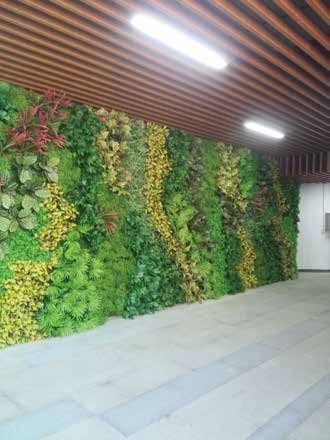
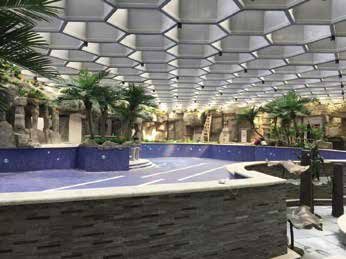
Real projects we have delivered in this kind of setting — on-site photographs, no mock-ups.
Specifying topiary balls for a project?
Send the diameter, the indoor or outdoor setting and any fire requirement, and we will return a structured quotation covering frame, foliage grade, fire documentation and delivery — usually within 24 hours on business days. Sampling starts at 1 piece, with a 3D render approved before production.