What Is the Best Outdoor Artificial Plant for Buildings?
The best outdoor artificial plant for a commercial building is an outdoor-UV-graded potted foliage plant — bamboo at 120–260 cm, ficus at 90–215 cm, dracaena at 80–250 cm or mixed palms and sansevieria at 45–250 cm — moulded in ABS/PU leaves and set in a weighted planter. Outdoor UV grade holds colour for 3–5 years in direct sun; stock SKUs ship in 5–12 days.
October 20, 2026 · Buying & Sourcing · 8 min read · By Everflorae Editorial Team

- The best outdoor artificial plant for a commercial building is a species question and a grade question. Species sets the silhouette; the UV grade decides whether the colour survives.
- Height range that works at entrances and along facades: potted bamboo 120–260 cm, ficus 90–215 cm, dracaena 80–250 cm, palms, cycas and sansevieria 45–250 cm, mini olive trees 65–210 cm.
- Our potted line is indoor-grade as standard; outdoor UV grade is specified on request and rated for 3–5 years of direct-sun colour.
- Ordering facts: MOQ is the carton quantity per SKU, samples are available at unit price, in-stock SKUs ship in 5–12 days and produced runs in 15–25 days.
What does “outdoor grade” actually mean for an artificial plant?
Every potted plant in our plants and foliage line is built the same way: leaves and stems moulded in ABS or cast in PU, on natural-look trunks, potted or supplied plant-only for your own containers. What separates an indoor plant from an outdoor one is not the shape — it is the colour system. Indoor-standard foliage is formulated for interiors. Outdoor grade adds UV stabilisation to the colour coat, and that is what carries the 3–5 year direct-sun colour expectation.
It is worth being honest about what UV stabilisation can and cannot do. It slows the fading that sunlight causes in pigments and plastics; it does not stop it. A south-facing planter in Dubai and a shaded entrance in Manchester age on different clocks even with identical foliage. We explain the physics in detail in our guide to how outdoor fading actually works — the practical summary is that orientation matters more than brand claims, and the sunniest face of any planting goes first.
Three site factors decide how long outdoor foliage lasts on a building:
- Direct sun hours. Full south or west exposure burns the colour budget fastest; north light barely ages it.
- Heat and reflected light. Podium paving, glass curtain walls and dark stone planters reflect and re-radiate heat onto the leaves.
- Water and salt. Moulded foliage sheds rain, but planters must drain — and coastal sites need periodic rinses because salt film dulls the leaf surface.
Which artificial plants perform best outdoors — and at what heights?
For commercial buildings, the winners are species that look architectural in a planter and hold their silhouette without pruning. Within the potted range, these are the formats that spec out well for entrances, facades and terraces:
- Potted bamboo, 120–260 cm. The classic screen plant: vertical canes with fine foliage read clean at both 2 m and 20 m, and the height range covers planter-to-parapet and planter-to-canopy applications. Our bamboo series is also offered in UV outdoor potted versions.
- Potted ficus, 90–215 cm. Dense, round-canopy and forgiving in mixed runs; detachable-foliage versions reduce packing volume for container loads. The canopy width fills planter groups at entrances without looking sparse.
- Dracaena fragrans, 80–250 cm. The tallest of the ordinary potted line, with an upright habit that suits narrow planter pits along glass facades where floor area is scarce.
- Palms, cycas and sansevieria, 45–250 cm. The mixed group covers everything from low sansevieria edging at 45 cm to statement cycas and palm clusters. Sansevieria in particular tolerates the hottest, most exposed positions because its upright leaves cast almost no wind load.
- Mini and detachable olive trees, 65–210 cm. For European and Middle-East style palettes, olives in terracotta-tone planters are the most requested entrance plant of the last two seasons.
Two species need a caveat. Monstera deliciosa (65–180 cm) is a superb interior plant but its large soft leaves age fastest in full sun — specify it only for sheltered or covered positions. And foliage bunches and wall-hanging vines (25–40 cm bunches, 60/90/120 cm hangings, 210 cm vines) are infill products, not free-standing outdoor plants.

Where do outdoor artificial plants go on a commercial building?
The species list only becomes a specification once it is matched to the exposure zones of the building. In practice, four zones cover most projects:
- Main entrance and porte-cochère. The signature position, and the reason the phrase best outdoor artificial plant for hotel lobby exists at all: covered entrances and street-facing lobbies look sheltered but receive hours of slanting and reflected sun. Outdoor UV grade is the honest specification here, with bamboo, ficus or canary-date-style palms in matched planters framing the door line.
- Facade and window planters. Fixed planter pits and window boxes along the elevation. Upright species — dracaena, sansevieria, bamboo — suit narrow pits; the plants sit in plant-only form dropped into the building’s own containers.
- Terraces, rooftops and podium gardens. Full weather plus wind. Weighted planters matter as much as the foliage here: a 150 cm+ plant in a light pot is a tipping risk on an exposed deck, so anchor or ballast the containers and expect to rinse foliage in coastal salt air.
- Poolside and water-adjacent decks. Chlorine splash and constant humidity. Choose outdoor UV grade, avoid metal-edged planters that corrode, and rinse foliage on the same schedule as the pool deck is cleaned.
Planter selection is a real decision, not an afterthought: our planters and bases line covers 30–150 cm fibreglass planters with drainage options for outdoor use, and we supply planter-ready drop-in units so the foliage arrives already fixed and weighted for its container.
How do you specify and order outdoor potted plants?
The commercial mechanics are straightforward, and knowing them early avoids the two most common order delays:
- Grade. Ask for outdoor UV grade explicitly — the line is indoor-standard by default, and outdoor grade is a specification on request. If a fire rating is needed for the indoor portions of the scheme, flame-retardant foliage is also available on request.
- Potted or plant-only. Stock pots for immediate installation, or plant-only supply for your own planters — the usual choice on projects where the architect has specified the containers.
- Quantity and MOQ. The minimum order is the carton quantity of each SKU. Plants are flat-packed, so a mixed order of species travels efficiently; full-container mixed loads are routine for this line.
- Samples. Available at unit price, one piece per species — approve the leaf texture and colour in your own daylight before the cartons ship.
- Lead time. In-stock SKUs ship in 5–12 days; produced runs, including outdoor UV grades not held in stock, take 15–25 days. Colour is held against a retained physical standard, so repeat orders match the first delivery.
- Private label. Custom hang tags, pot branding and carton printing are all available for distributors and fit-out contractors.
One budgeting note: outdoor UV grade carries a cost premium over indoor foliage, and the honest way to compare it is against replacement landscaping, not against untreated artificial plants. Our total-cost-of-ownership comparison runs the numbers for commercial projects — irrigation, maintenance contracts and plant mortality are what make live planting expensive, and outdoor UV grade is what keeps the artificial version presentable through its 3–5 year cycle.
Frequently asked questions
What is the best outdoor artificial plant for a commercial building?
How long do outdoor artificial plants last on a building facade?
How many pieces do I have to order?
Is outdoor-grade foliage suitable for a covered hotel lobby or entrance?
Sources & attributed quotations
Named sources behind this guide; the quotations are verbatim from the issuing bodies, with links to the official pages.
“This document specifies methods for exposing plastic specimens to fluorescent UV lamp radiation, heat and water in apparatus designed to simulate the weathering effects that occur when plastic materials are exposed in actual end-use environments to global solar radiation, or to window-glass filtered solar radiation.”
— ISO (International Organization for Standardization), ISO 4892-3:2024, Plastics — Methods of exposure to laboratory light sources — Part 3: Fluorescent UV lamps, official source
“The use of this apparatus is intended to induce property changes consistent with the end use conditions, including the effects of the UV portion of sunlight, moisture, and heat.”
— ASTM International, ASTM G154-23, Standard Practice for Operating Fluorescent Ultraviolet (UV) Lamp Apparatus for Exposure of Materials, official source
- ISO — ISO 4892-3:2024, methods of exposure to laboratory light sources, fluorescent UV lamps
- ASTM International — ASTM G154-23, operating fluorescent UV lamp apparatus for exposure of materials
- Everflorae — Potted Plants & Foliage: specifications, UV grades and lead times
Related pages
Related project cases
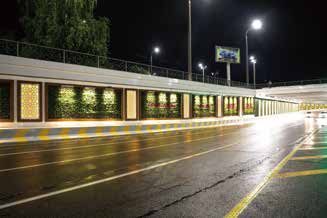
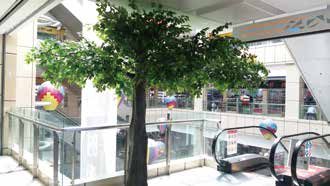
Real installations in this kind of setting — on-site photographs, no mock-ups.
Specifying outdoor plants for a building project?
Send the species mix and heights, the installation setting (sheltered, direct sun, poolside or coastal), and the planter situation — ours or yours. We will come back with the UV grade options, carton quantities and lead times — normally within 24 hours on business days.
Sister brand · GardenStone
Pair it with landscaping stone (GardenStone)
From the same supplier group — GardenStone supplies decorative pebbles, gravel and landscape stone that complete the same hotels, resorts, malls and Japanese gardens. One source for the whole landscape.
Explore GardenStone →