What Is the Best Outdoor Artificial Plant for a Restaurant?
The best outdoor artificial plant for a restaurant is an outdoor-UV-graded potted foliage plant — bamboo at 120–260 cm, ficus at 90–215 cm, dracaena at 80–250 cm or palms and sansevieria at 45–250 cm — moulded in ABS/PU leaves and set in a weighted, free-draining planter. Outdoor UV grade holds colour for 3–5 years in direct sun; stock SKUs ship in 5–12 days.
October 28, 2026 · Buying & Sourcing · 8 min read · By Everflorae Editorial Team

- The best outdoor artificial plant for a restaurant is a species question and a grade question: species sets the silhouette; the UV grade decides whether the colour survives the sun and the grease-laden air of a kitchen-adjacent terrace.
- Height ranges that work at restaurant doors and patios: bamboo 120–260 cm, ficus 90–215 cm, dracaena 80–250 cm, palms and sansevieria 45–250 cm, mini olive 65–210 cm.
- MOQ is the carton quantity per SKU; samples at unit price; stock ships in 5–12 days, standard production 7–15 days, custom 20–45 days.
- Commercial-grade foliage (the grade we supply) uses UV-stabilised ABS/PU and fire-retardant options; home-grade décor plants are not built for daily commercial wear or outdoor UV.
Why a restaurant patio is one of the hardest outdoor tests for artificial plants
A restaurant exterior combines almost every failure mode an artificial plant can face, and then adds a few of its own. Pavement and glass re-radiate heat long after the kitchen shuts. Drop-off canopies look sheltered but funnel hours of slanting, reflected sun onto the door-line planters. Upper terraces sit in full wind, staff move the pots for service every morning, and the site runs seven days a week from brunch to last call.
Two stressors are specific to food service. The first is grease and vapour: a planter beside an open kitchen exhaust or a smoker’s patio collects a film that dulls leaves faster than UV does, so the honest answer is a plant you can rinse, not a fabric you must replace. The second is handling: commercial foliage gets bumped by trolleys and re-positioned for covers, so the frame has to be fibreglass or steel, not the bendy wire of a home décor piece.
This is why the honest answer has two parts. Species decides whether the plant looks right in a planter at a restaurant entrance — architectural, dense, stable in silhouette without pruning. Grade decides whether it still looks right in year three. Our potted line is indoor-grade as standard, and outdoor grade is a specification on request: it adds UV stabilisation to the ABS/PU colour coat and carries a 3–5 year direct-sun colour expectation. The short version of our outdoor fading guide: orientation matters more than any brand claim, and the sunniest face ages first.
Which outdoor artificial plants hold up best at a restaurant?
Within our potted plants and foliage line, the formats that spec out best for restaurant exteriors look architectural in a planter and keep their shape without maintenance:
- Potted bamboo, 120–260 cm. The default screen plant for terraces and smoking patios: vertical canes with fine foliage read clean at both 2 m and 20 m, and the UV outdoor potted version is specified for exposed runs.
- Potted ficus, 90–215 cm. Dense, round-canopy and forgiving in mixed runs; detachable-foliage versions cut packing volume for container loads to a franchise group.
- Dracaena fragrans, 80–250 cm. The tallest of the standard potted line, with an upright habit that suits narrow planter pits along a glazed façade.
- Sansevieria, cycas and palms, 45–250 cm. From low sansevieria edging at 45 cm up to statement cycas and palm clusters; sansevieria suits the hottest positions because its upright leaves catch almost no wind load.
- Mini olive trees, 65–210 cm. For Mediterranean and Middle-East style dining streets, olives in terracotta-tone planters have been the most requested entrance plant of recent seasons.
For the elevation itself, the potted line hands over to green wall panels: 1×1 m modules planted at 90–120 plants/m² and weighing 4–6 kg/m², supplied in UV-stabilised foliage. Panels are quoted per m² with a 50 m² minimum order, and our green wall line covers panel, backing and fixing details. One caveat: monstera (65–180 cm) is a superb interior plant, but its large soft leaves age fastest in full sun — keep it indoors near the host stand, not on the terrace.

Where each format goes on a restaurant site
The species list only becomes a specification once it is matched to the exposure zones of the site. Five zones cover most restaurants:
- Entrance and valet. The signature position: covered entrances receive hours of slanting and reflected sun, so outdoor UV grade is the honest specification. Bamboo or ficus in matched planters frame the door line and photograph well for the listing.
- Dining terrace and patio. Free-standing planters define covers and break wind between tables. Weighted bases matter as much as foliage — a 150 cm+ plant in a light pot is a tipping risk where guests brush past.
- Indoor-outdoor bar. The boundary where greasy, humid air meets foliage: choose moulded leaves you can wipe, and keep the planters drained so condensation does not pool.
- Buffet and banquet edges. Low sansevieria edging at 45–90 cm frames the station and survives constant staff movement; it is also the easiest to rinse between services.
- Facade and planter pits. Green wall panels cover the elevation; upright species fill fixed pits, usually supplied plant-only for the architect’s own containers.
Planter selection is a real decision, not an afterthought: our planters and bases line covers 30–150 cm fibreglass planters with drainage options for outdoor use, and we supply planter-ready drop-in units fixed and weighted for their container.
Commercial-grade vs home artificial plants — what actually changes
The single most common mistake in a restaurant fit-out is buying home décor plants and expecting them to survive a commercial terrace. The gap between commercial-grade artificial plants and home-grade ones is not marketing — it is five specific differences that show up within one season outdoors:
- Foliage material. Commercial grade uses UV-stabilised ABS/PU that is moulded, colour-fast and wipeable. Home grade uses thin injection plastic that chalks and cracks in UV within months.
- Frame. Commercial trunks and canes are fibreglass or galvanised steel, rated for daily handling and wind. Home pieces use light wire that bends and snaps when a trolley hits them.
- UV and colour life. Commercial outdoor grade is specified for 3–5 years of direct-sun colour; home grade has no UV stabilisation and fades patchily on the south face.
- Fire performance. Commercial foliage can be made fire-retardant to NFPA 701, BS 5867 or EN 13501-1 on request — a real requirement under many restaurant and hospitality fire codes. Home décor carries no fire rating.
- Spare parts and repeatability. Commercial supply holds colour against a retained physical standard, so a replacement pot matches the first delivery two years later. Home lines change colourway every season and the matching piece is gone.
The practical conclusion: buy home grade only for an indoor host-stand vignette that never sees sun, and buy commercial grade for everything on or near the terrace. The cost gap is recovered the first time you do not replace a faded, cracked pot mid-season.
How do you specify and order outdoor plants for a restaurant project?
Settling the commercial mechanics early avoids the two most common order delays:
- Grade. Ask for outdoor UV grade explicitly — the potted line is indoor-standard by default. If the scheme includes indoor sections near the kitchen, flame-retardant foliage is available on request to NFPA 701, BS 5867 or EN 13501-1 standards.
- Potted or plant-only. Stock pots for immediate installation, or plant-only supply for the architect’s own containers.
- Quantity and MOQ. The minimum order is the carton quantity of each SKU. Plants are flat-packed, mixed species orders travel efficiently, and full-container mixed loads are routine for franchise groups.
- Samples. Available at unit price, one piece per species — approve the leaf texture and colour in the restaurant’s own daylight before the cartons ship.
- Lead time. In-stock SKUs ship in 5–12 days; standard catalog production runs 7–15 days; custom-made pieces 20–45 days. Colour is held against a retained physical standard, so repeat orders match the first delivery.
- Private label. Custom hang tags, pot branding and carton printing are available for distributors and hospitality groups.
One budgeting note: outdoor UV grade carries a premium over indoor foliage, and the honest comparison is against replacement landscaping, not untreated artificial plants — irrigation, maintenance contracts and plant mortality are what make live planting expensive, and our total-cost-of-ownership comparison runs those numbers for commercial projects.
Frequently asked questions
What is the best outdoor artificial plant for a restaurant?
How long do outdoor artificial plants last on a restaurant patio or terrace?
What is the difference between commercial-grade and home artificial plants?
How many pieces do I have to order, and how fast can a restaurant order ship?
Sources & attributed quotations
Named sources behind this guide; quotations are verbatim from the issuing bodies, with links to the official pages.
“A test method to determine the flammability of draperies and other textile materials intended for use in public occupancy buildings and which may be traversed by air currents, either vertical or horizontal.”
— NFPA (National Fire Protection Association), NFPA 701, Standard Methods of Fire Tests for Flame Propagation of Textiles and Films, official source
“Products (excluding floorings) classified into classes A1, A2, B, C, D, E or F based on their reaction to fire performance determined according to this European standard.”
— CEN (European Committee for Standardization), EN 13501-1, Fire classification of construction products and building elements — Part 1: Classification using data from reaction to fire tests, official source
- NFPA — NFPA 701, flame propagation of textiles and films
- CEN — EN 13501-1, reaction to fire classification of construction products
- Everflorae — Potted Plants & Foliage: specifications, UV grades and lead times
Related pages
Related project cases
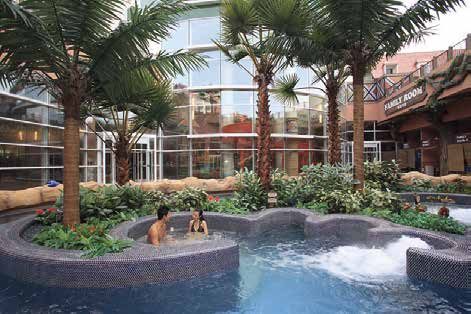
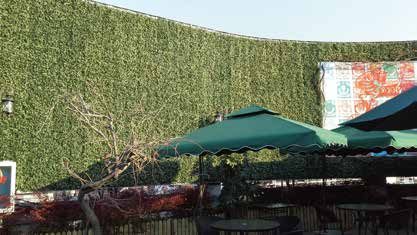
Real installations in this kind of setting — on-site photographs, no mock-ups.
Specifying outdoor greenery for a restaurant project?
Send the species mix and heights, the exposure zones (entrance, terrace, bar or facade), and the planter situation — ours or yours. We will come back with the UV grade options, carton quantities and lead times — normally within 24 hours on business days.
Sister brand · GardenStone
Pair it with landscaping stone (GardenStone)
From the same supplier group — GardenStone supplies decorative pebbles, gravel and landscape stone that complete the same hotels, resorts, malls and Japanese gardens. One source for the whole landscape.
Explore GardenStone →